
 CASE 01Evaluation
Game Development
Samurai game comparison
Higgsfield compares samurai game demos made with Opus 5.5 and GPT-6 Astra as part of its own platform promotion.
RECENTLY UPDATED / (SHANGHAI TIME)
LIN YUEJI / ARCHIVE
Browse 221 public Claude Opus 5.5 case records across games, 3D, websites, video production, business analysis, and coding workflows. Demos, evaluations, failures, and tool contributions stay visible; separate posts about the same work remain separate records.
USE CASE MAP / 01
The supplied cases are retained with their tasks, outputs, tools, and reported limits. Platform promotion, disclosed collaboration, second-hand reports, and unfinished attempts remain identified. Record counts do not represent independent successful projects.
HOW TO USE / 02
Find a task, check the input, toolchain, revisions, and outcome, then choose a workflow to test yourself.
Choose games, 3D, websites, documents, video, or code tests; sort by time, likes, or bookmarks.
Check the roles of Blender, Jev, and image or video tools. Distinguish generated code, tool calls, and final rendering.
Open the creator’s post to check promotional disclosures, test conditions, failures, and unfinished work.
Connect through EvoLink and prepare the required external tools. Record time, cost, and runnable results.
REAL CREATOR CASES / 03
Up to four cases per row. Select a creator to open the original case; images and videos load only when needed.
221 cases
CASE 01EvaluationHiggsfield compares samurai game demos made with Opus 5.5 and GPT-6 Astra as part of its own platform promotion.
 CASE 02Demo
BridgeMind's promotional demo presents a one-pass Mario Kart game with playable Mario and Luigi characters. Its claim of outperforming Fable 5.1 is the platform's own assessment.
 CASE 03Demo
The author demonstrates a Minecraft clone tested in a browser, showing the result of this game-generation attempt.
 CASE 04Demo
This platform promotional demo presents a game inspired by the Antikythera mechanism, with audiovisual content generated in real time by a single roughly 3 MB HTML file.
 CASE 05Demo
The author reports generating an anime-character brawler in one pass using only Roblox toolbox and considers it better than Fable. The game depends on the toolbox resources.
 CASE 06Evaluation
The author compares Opus 5.5, Fable 5.1 and GPT-6 Astra on a Spider-Man game task.
 CASE 07Demo
The author shares a playable Minecraft clone with water physics and game mechanics, considering the result better than Astra while reporting that the model run was even slower than Astra.
 CASE 08Evaluation
BridgeBench's platform promotion compares Opus 5.5 and GPT-6 Sol with the same prompt and task. The media preview shows DEAD SIGNAL first-person game scenes; quality judgments are the platform's own.
 CASE 09Demo
The author reports a one-prompt beekeeping game with no image asset files: hives, flowers, bees and the beekeeper are drawn in code. Gameplay includes planting flowers, flying bees and harvesting honey.
 CASE 10Demo
The author presents a Snake game made with Opus 5.5 as a concrete example of game creation.
 CASE 11Evaluation
Higgsfield presents a comparison of Opus 5.5 and GPT-6 Sol for 3D game development as part of its own platform promotion.
 CASE 12Demo
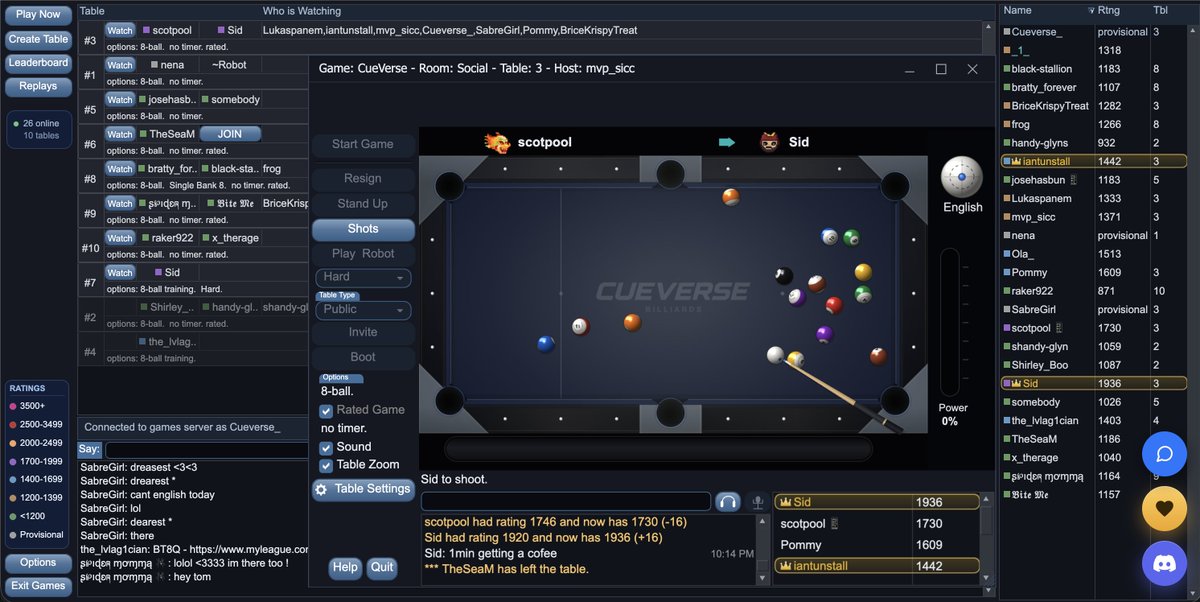
The author reports a one-pass multiplayer pool game with 8-ball, 9-ball, snooker, 2v2, voice chat, tournaments, ratings, replays, spectating and mobile/browser support. A link is provided; existing player activity is self-reported.
 CASE 13Integration
Higgsfield's promotional demo shows a game built through its API, featuring water reflections and arcade gameplay.
 CASE 14Demo
The author demonstrates a browser-based Minecraft clone as a game-recreation attempt.
 CASE 15Demo
The author demonstrates a multiplayer lawn-mowing simulator with beer and cigar elements, deploying it on a personal server for livestream viewers to join.
 CASE 16Demo
This post shares footage of a model-generated game without specifying its genre. It is a secondhand showcase.
 CASE 17Demo
The author reports a one-pass doodle-style shooting game that also includes a final boss.
 CASE 18Demo
The author demonstrates a Mario game generated using the Medium setting.
 CASE 19Evaluation
The post compares Opus 5.5 with GPT-6 Sol, with kart-racing game footage visible in its media preview.
 CASE 20Evaluation
The author generates games with the same prompt, compares Opus 5.5 with GPT-6 Sol and says game links are provided below the post.
CASE 21DemoThe media preview repeats Higgsfield's Opus 5.5 versus GPT-6 Astra samurai game comparison, using the same footage shared by other accounts. This is a secondhand showcase.
 CASE 22Demo
The author demonstrates a Snake game described as generated in a single pass.
 CASE 23Demo
The author demonstrates roughly 13,000 lines of Three.js for Call of Duty Zombies-style gameplay, including window-board removal, the Mystery Box, Pack-a-Punch, Jugg, Ray Gun and BO1 round mechanics. They report no asset files: textures, groans and jingles are generated in code.
 CASE 24Demo
The author reports one initial prompt and about two refinement rounds for a snow game, with the model working for over an hour. The demo includes snow spray, trees, tracks, lighting, shadows and sound effects.
CASE 25DemoThis post shares Higgsfield's Opus 5.5 versus GPT-6 Astra samurai game comparison, recording another secondhand post about the same work.
 CASE 26Demo
In this disclosed partnership post, an author with early model access reports adding game features and editing a trailer, and provides a playable link.
 CASE 27Demo
The author reports making an ARK-style multiplayer survival island in Tesana with a few prompts, featuring quests, dinosaur taming, crafting and combat, then playing with two friends. The claimed 30+ hours of gameplay is self-reported; the report flags a possible, unconfirmed partnership.
 CASE 28Evaluation
Higgsfield's own platform promotion compares Opus 5.5 and GPT-6 Sol for 3D game creation in Unreal Engine.
 CASE 29Demo
The author reports making a dark fantasy RPG in Tesana with a few prompts, including multiple areas, quests and voiced dialogue. The report flags a possible, unconfirmed partnership.
 CASE 30Demo
The author demonstrates a shop simulator with 300+ playable guitar models and noise-triggered fights. Three.js is reported as laggy; rebuilding it in Blender/Godot is a plan, not a completed step.
 CASE 31Demo
Higgsfield's platform promotion demonstrates a hand-drawn-style chess game with move analysis.
 CASE 32Evaluation
The author uses the same prompt to compare Opus 5.5 and Kimi K3 flight simulators, showing UI, multiple camera angles and voice. Both reportedly run smoothly, while Kimi K3 is more cost-efficient.
 CASE 33Demo
Tesana's own promotional demo presents a fantasy world generated from one prompt, including gameplay, systems, audio and UI.
 CASE 34Demo
The author demonstrates an archery game and reports completing its build and deployment in under ten minutes.
 CASE 35Demo
The author demonstrates coral-reef wallpaper with an interaction that lets users feed the fish.
 CASE 36Demo
The author builds water simulations during a livestream; this post shows one of the three results.
 CASE 37Demo
The author demonstrates a one-pass 3D water recreation from a video reference and considers it close to the original. The quoted reference is a Grok 4.7 water demo.
 CASE 38Demo
Higgsfield's platform demo shows layered hand anatomy with bones, muscles and tendons, using a webcam or clicks to locate pain. The suggested causes and recovery tips have not been validated.
 CASE 39Evaluation
This platform promotional comparison builds a touch-grass simulator in Kilo Code, reporting $3.52 for Grok 4.7 and $7.35 for Opus 5.5. These are self-reported costs for this run.
 CASE 40Demo
This secondhand post shares a trebuchet sketch turned into a 3D simulation with physics, controls and sound effects, claiming it took one prompt.
 CASE 41Demo
The preview shows rails, pendulum rods and other mechanisms. The author's bill records 52m 6s of API runtime and $19.86; the 4h 21m elapsed time includes roughly three idle hours, not continuous model work.
 CASE 42Demo
The author demonstrates facial changes under different gravity settings in Higgsfield. The report flags a possible, unconfirmed partnership.
 CASE 43Demo
The author reports a single Medium-effort run lasting over four hours to create interconnected HTML pages explaining how the Web works, with a link to try the result.
 CASE 44Evaluation
Higgsfield's promotional demo presents a 3D educational page where an eye can be taken apart and inspected, comparing the result with GPT-6 Sol.
 CASE 45Limit
The author attempts an interactive journey from the observable universe to the Planck scale, but reaches the Max 5x usage limit and completes only part of the work.
 CASE 46Evaluation
Using the same single prompt and only Blender, the author compares procedural ten-second shots and build timelapses. They report Opus at 35m, 199.6k output tokens and about $13.3 in API terms, versus GPT-6 Astra at 28m, 56.6k tokens and about $14.5.
 CASE 47Integration
The author demonstrates a recreation of San Francisco in Unreal Engine, with people, pet and vehicle behavior driven by Jev.
 CASE 48Demo
The author demonstrates rendering 500 types of fitness equipment and building a gym-layout tool around them.
Showing 48 / 221
BUILD WITH EVOLINK / 04
Access Claude Opus 5.5 through EvoLink. Start with a defined task and the tools and inputs shown in the case, then measure cost, time, and whether the result meets your requirements.