
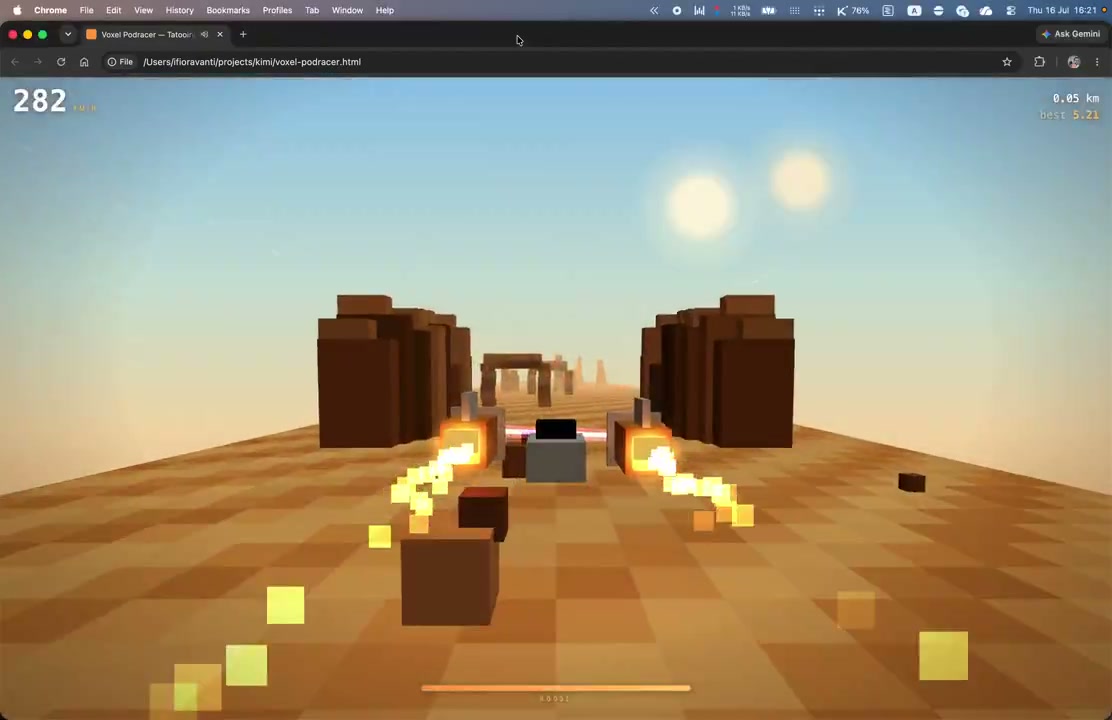
 CASE 01Demo
Interactive Games & 3D
Build a Voxel Pod Racer From One Prompt
Use a short scene concept to prototype a playable voxel pod-racing experience, then plan a second pass for racers, a finish line, and detail review.
RECENTLY UPDATED / (SHANGHAI TIME)
LIN YUEJI / ARCHIVE
Explore real Kimi K3 cases across games, 3D, frontend motion, coding integrations, and evaluation limits.
USE CASE MAP / 01
This collection preserves the key result, evidence type, creator, and original source for 169 public cases so you can quickly spot repeatable methods.
HOW TO USE / 02
Narrow by task, verify context at the original source, then reproduce the most useful path through EvoLink.
Start with coding, agents, creative work, evaluation, or another task family.
Use titles, methods, or creators to find the closest case to your current goal.
Select the creator to review the full demo, limits, context, and original explanation.
Choose a method worth testing, connect to the model, and turn it into your workflow.
REAL CREATOR CASES / 03
Up to four cases per row. Select a creator to open the original case; images and videos load only when needed.
169 cases
CASE 01DemoUse a short scene concept to prototype a playable voxel pod-racing experience, then plan a second pass for racers, a finish line, and detail review.
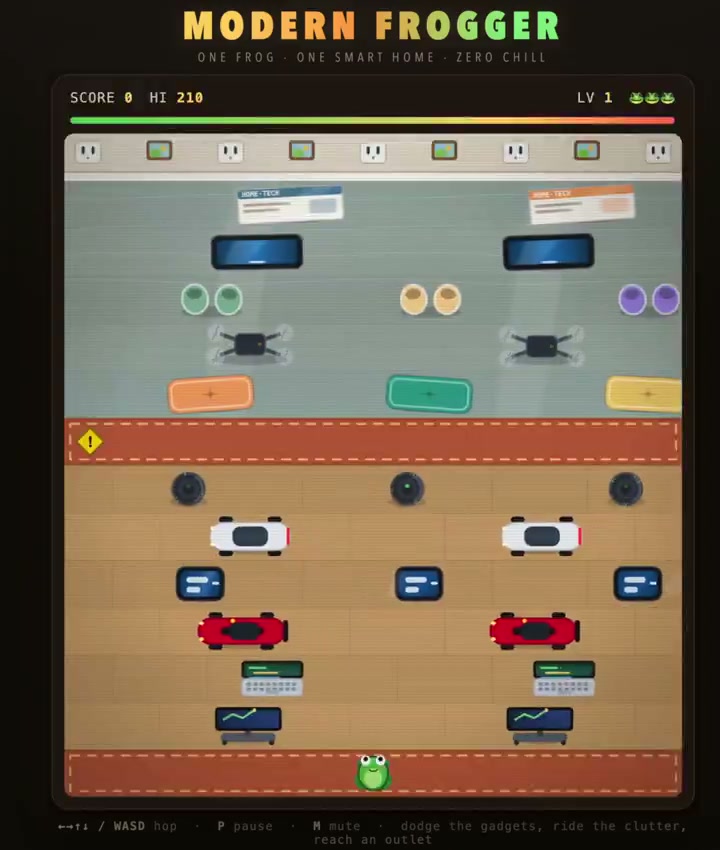 CASE 02Evaluation
Hold the prompt constant when comparing two model outputs so the resulting gameplay difference is easier to inspect.
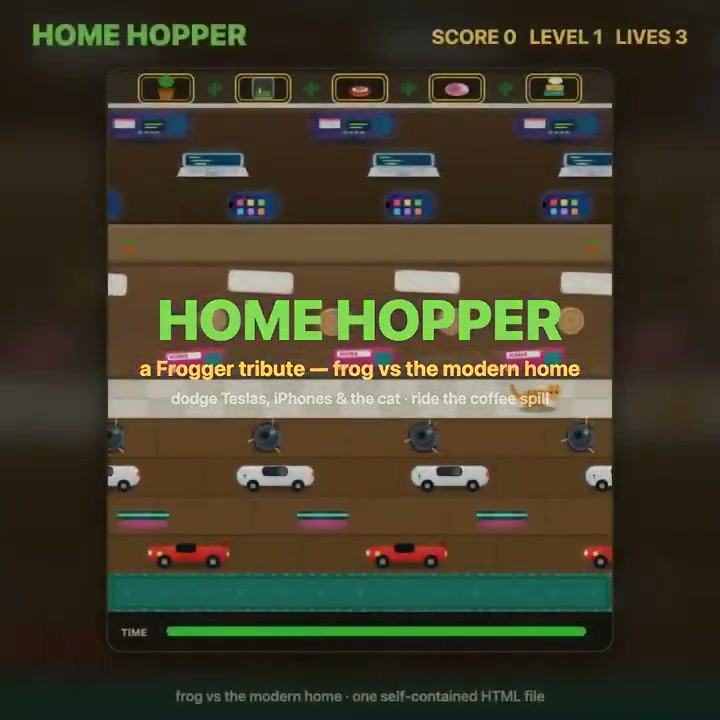 CASE 03Demo
Test a one-shot game build together with a separate one-shot workflow for recording the resulting gameplay.
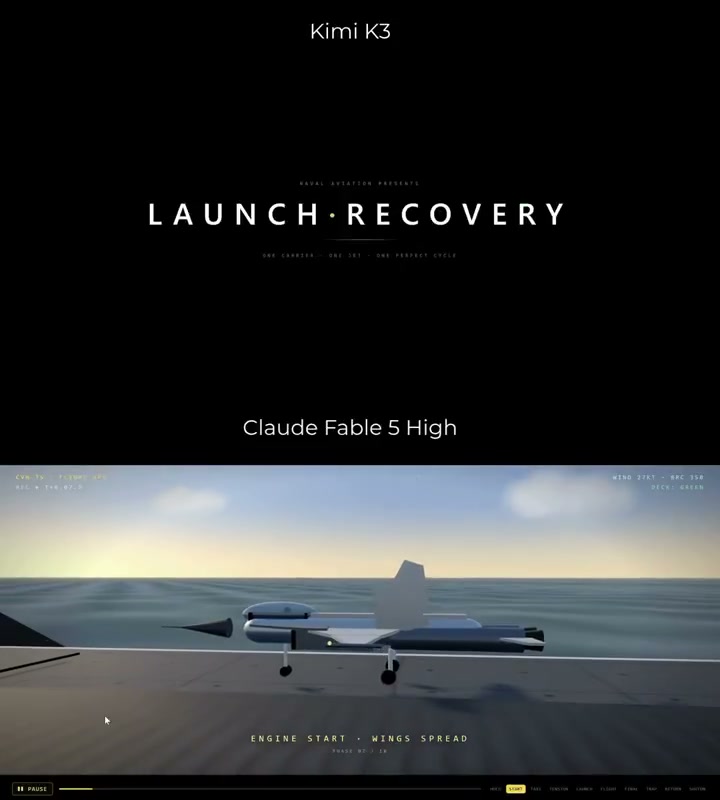 CASE 04Demo
Use a concrete launch-and-recovery scene to probe Kimi K3's ability to produce an interactive Three.js 3D prototype.
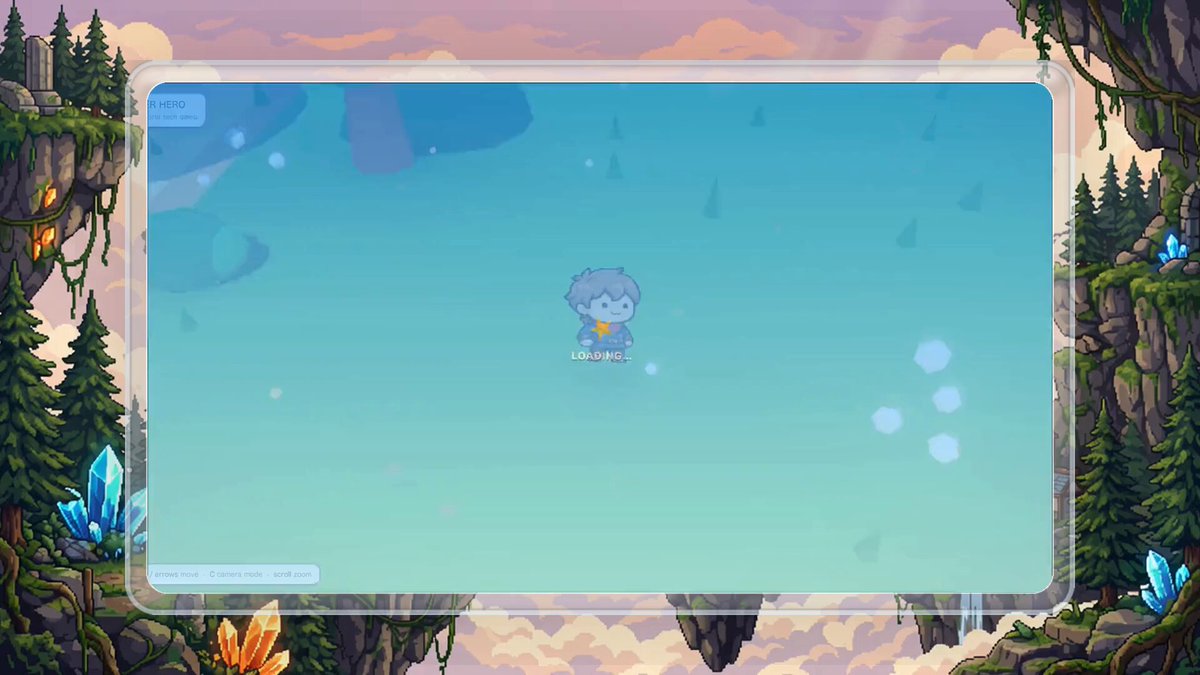 CASE 09Demo
Combine Kimi K3 with an agent harness and asset tools to produce both 2D and 3D game elements.
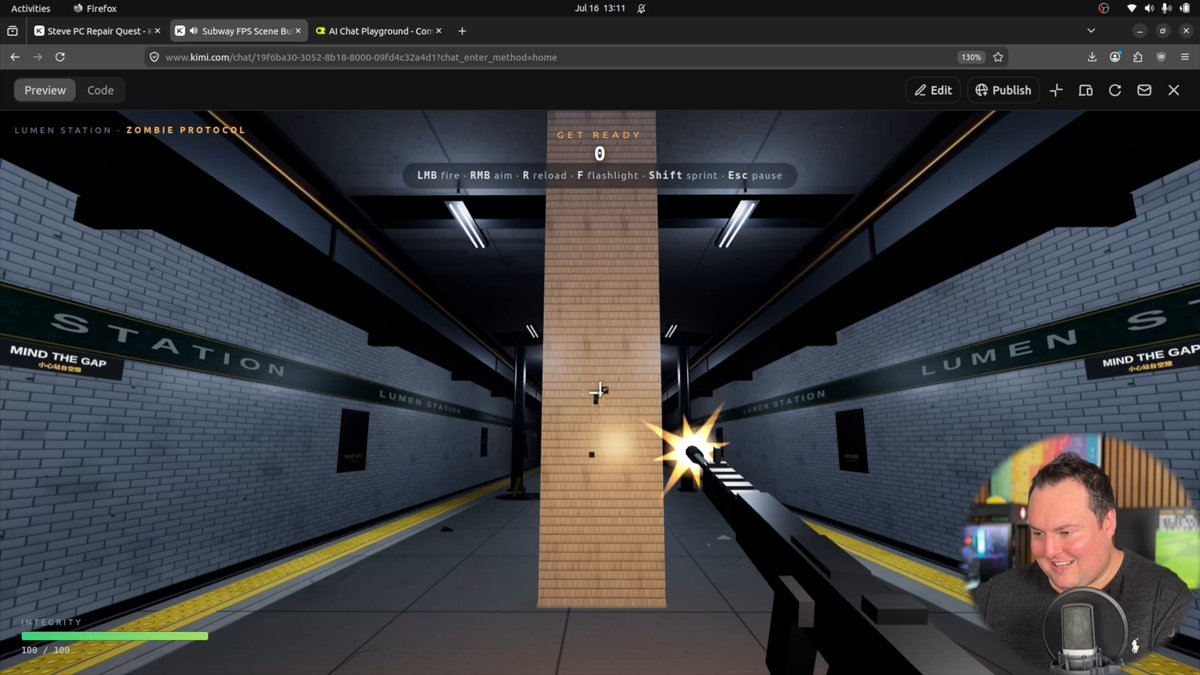 CASE 11Demo
Use a concrete subway setting to inspect a generated first-person shooter result.
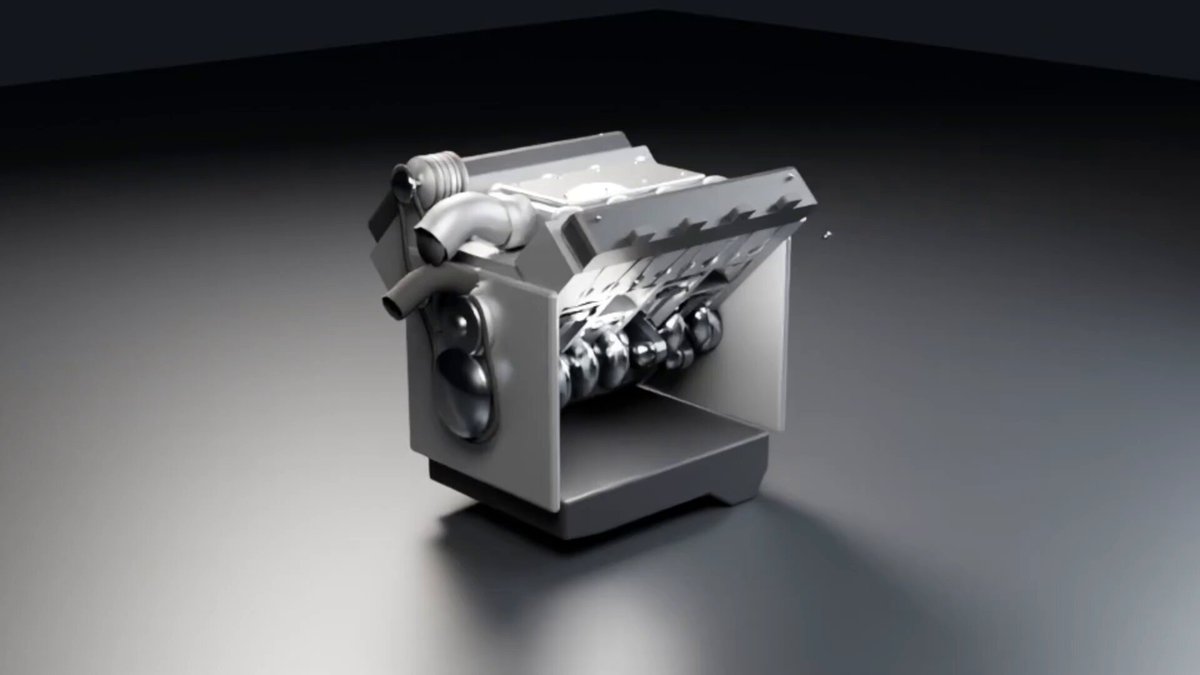 CASE 19Integration
Use Blender MCP and a single request to generate a detailed mechanical 3D model.
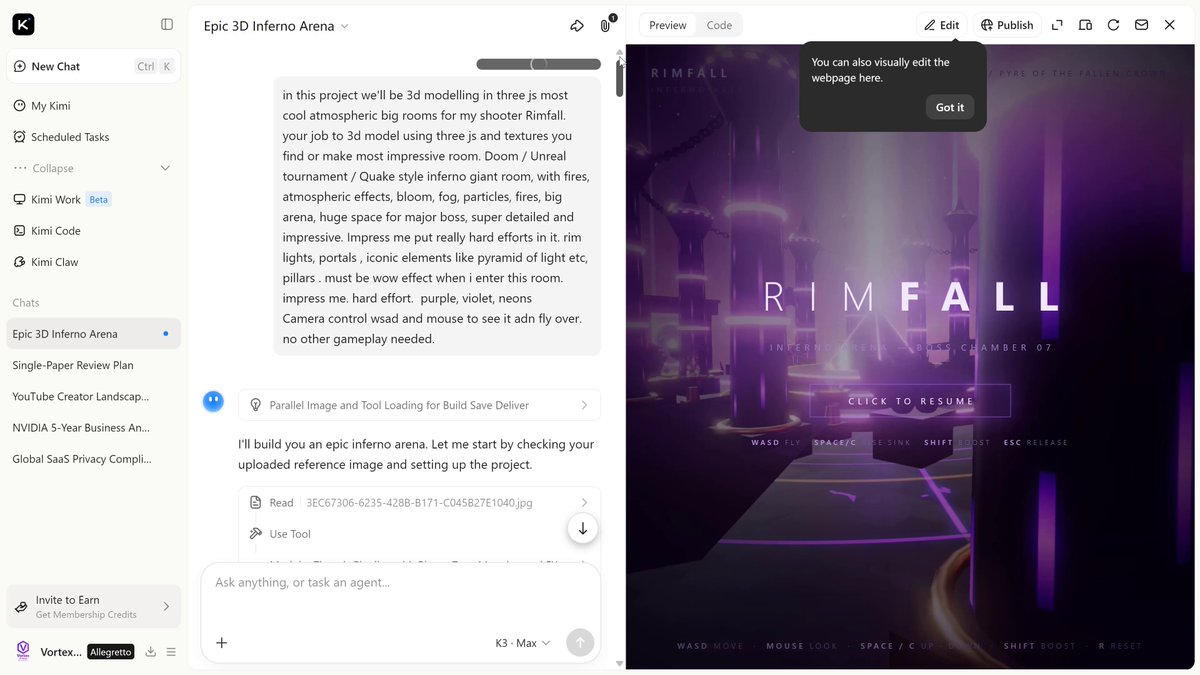 CASE 23Demo
Use a single reference to test one-shot generation of a complete playable arena.
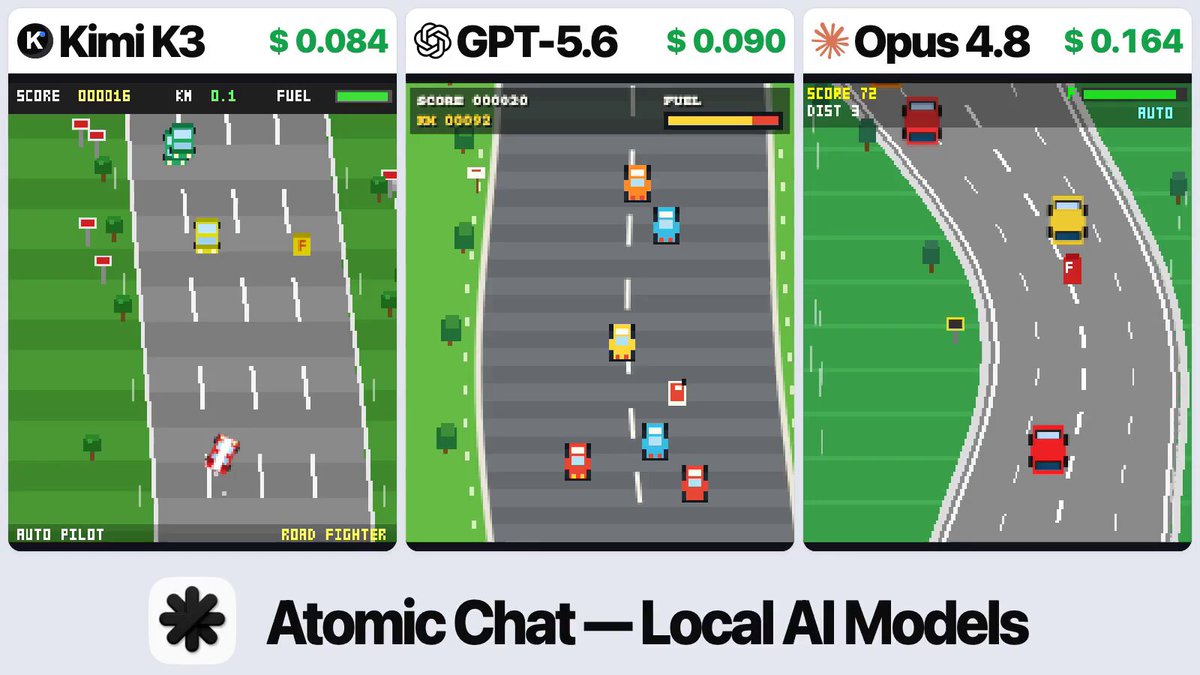 CASE 24Benchmark
Require graphics, enemies, rules, and autonomous play inside standalone HTML game files.
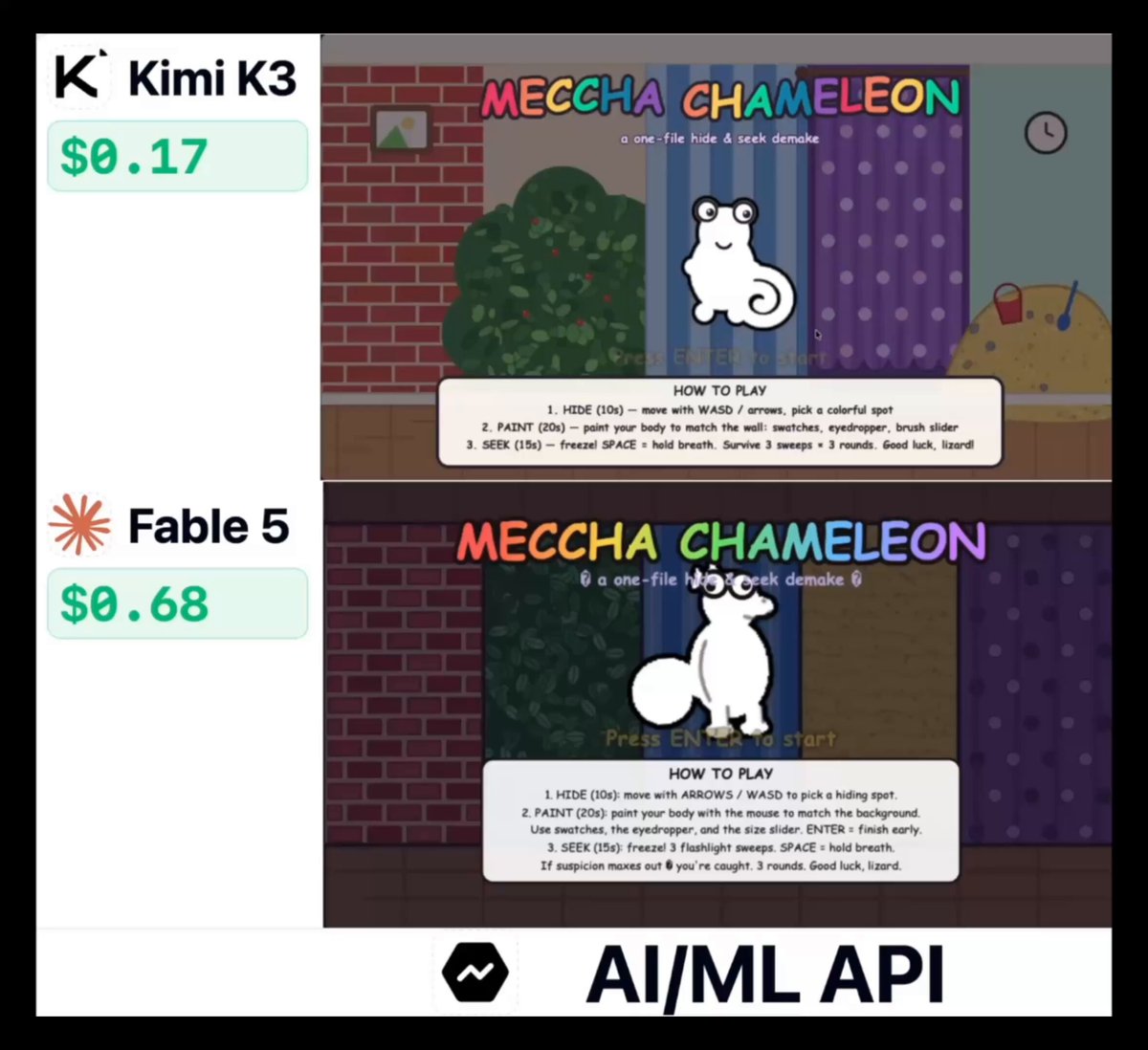 CASE 27Benchmark
Generate a single-file game with color matching, procedural areas, sound, and multi-round scoring.
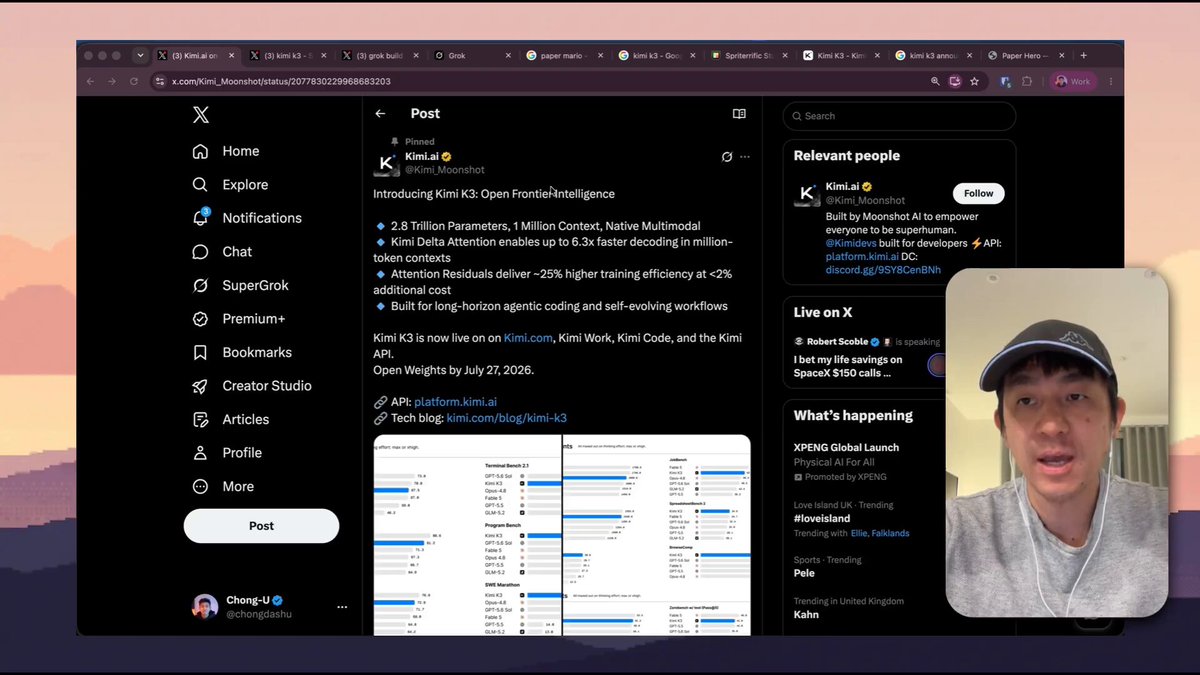 CASE 36Tutorial
Use Kimi K3 with Grok Build or Claude Code and Spriterrific to assemble a 2.5D game workflow.
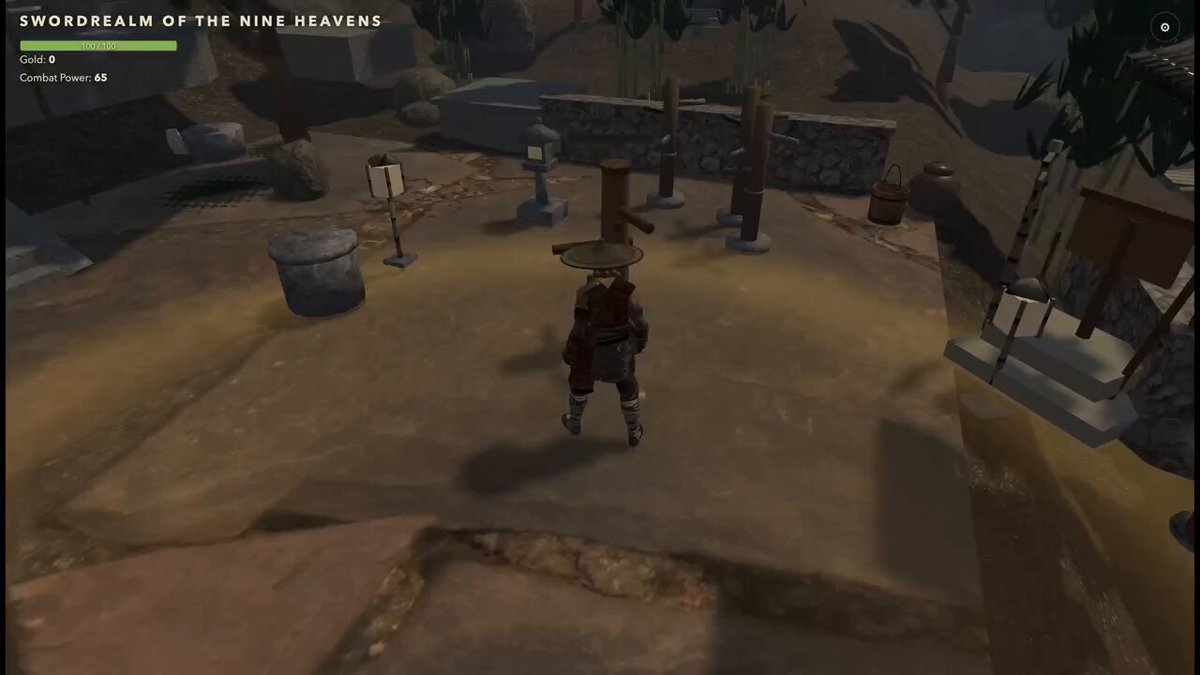 CASE 43Demo
Combine melee combat, quests, inventory, weather, interiors, Blender environment work, and adapted assets.
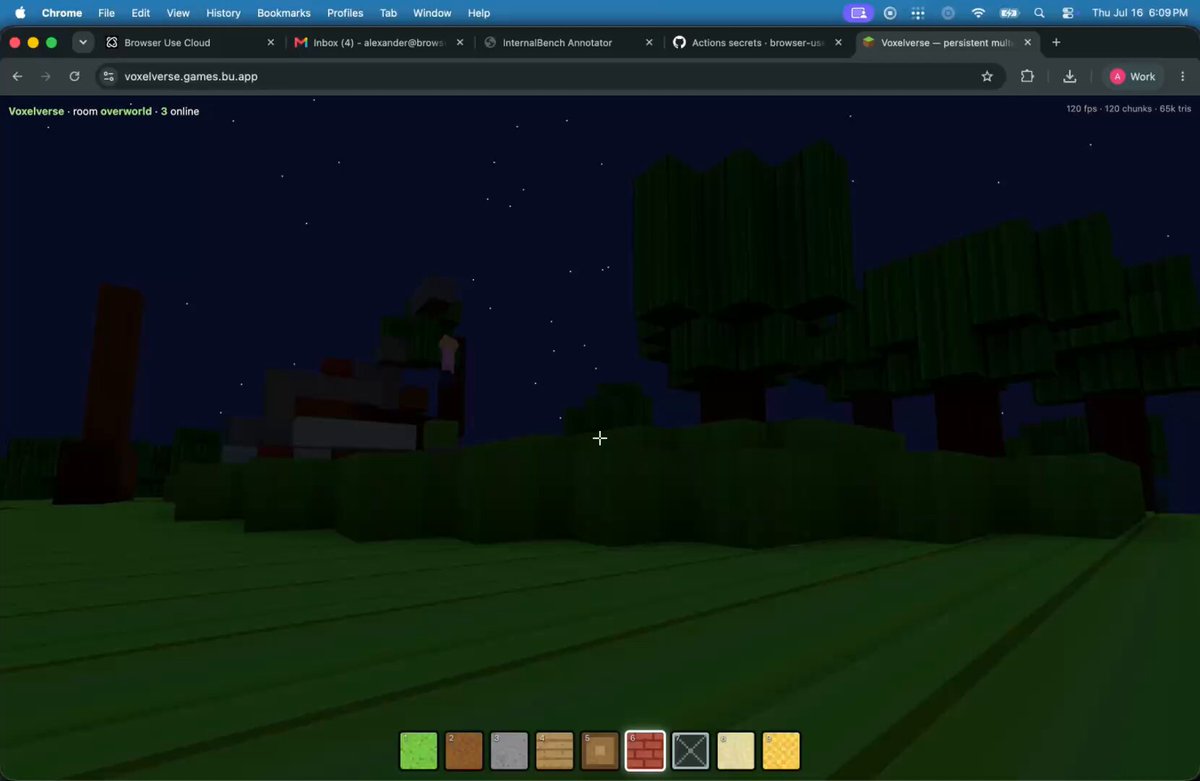 CASE 44Demo
Use a bounded time-and-cost run to produce a playable online multiplayer browser game.
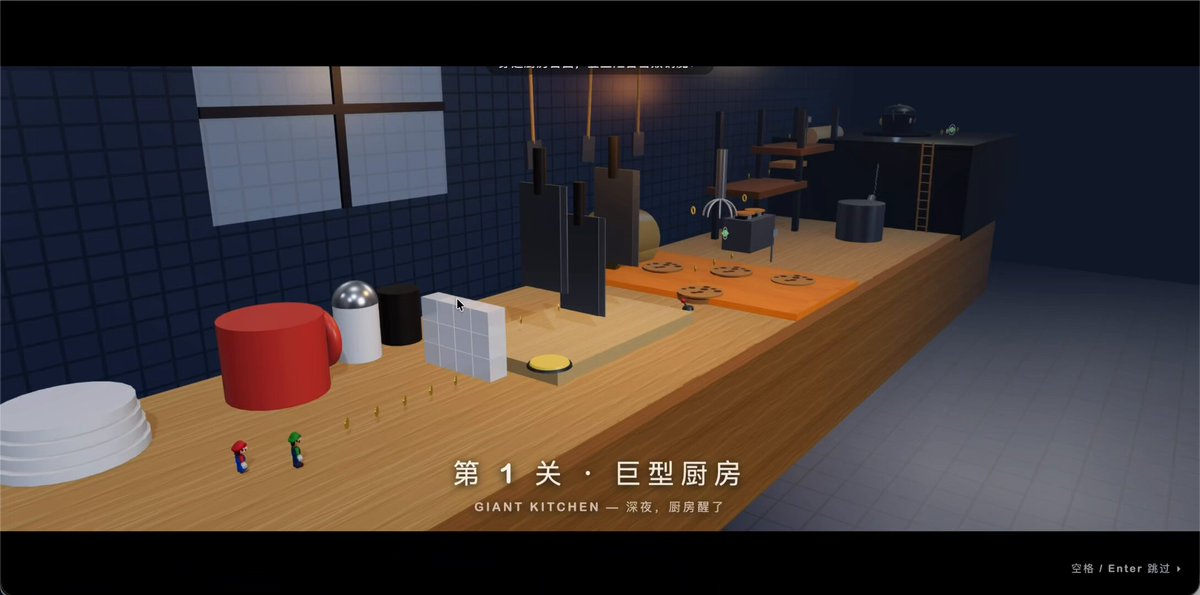 CASE 48Demo
Use one request to generate browser-based split-screen cooperation and real-time environment interaction.
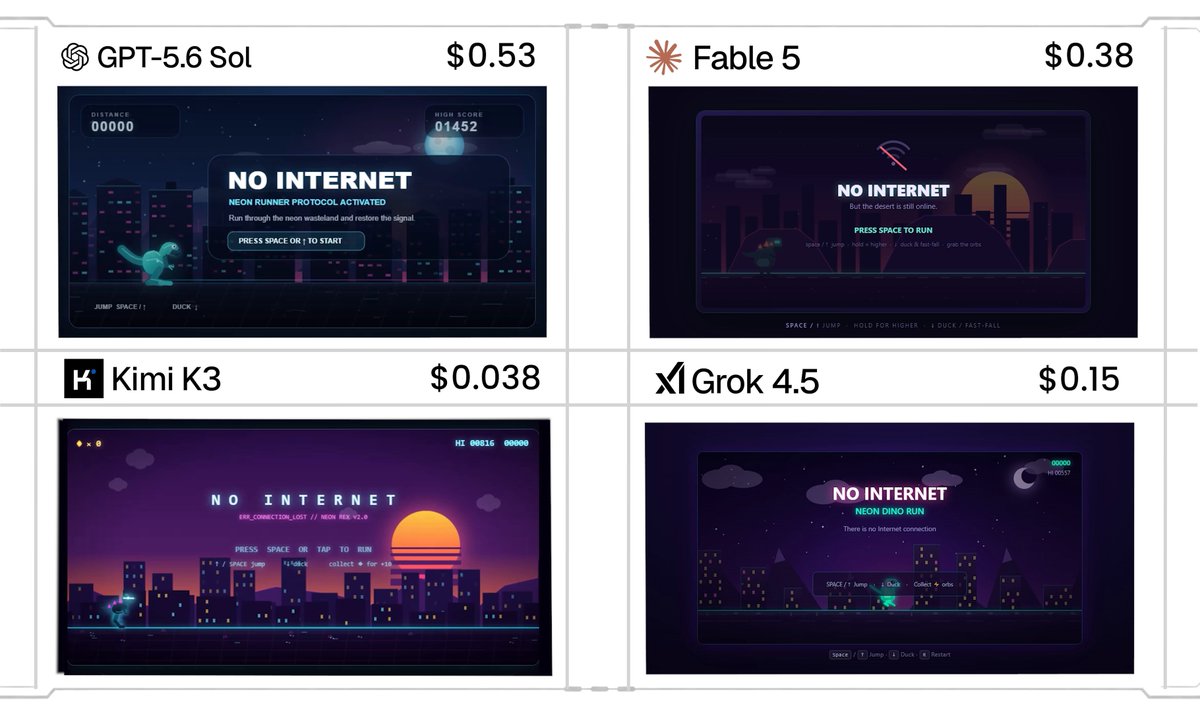 CASE 49Demo
Use Command Code's design command for a one-shot game build and record whether the result is playable.
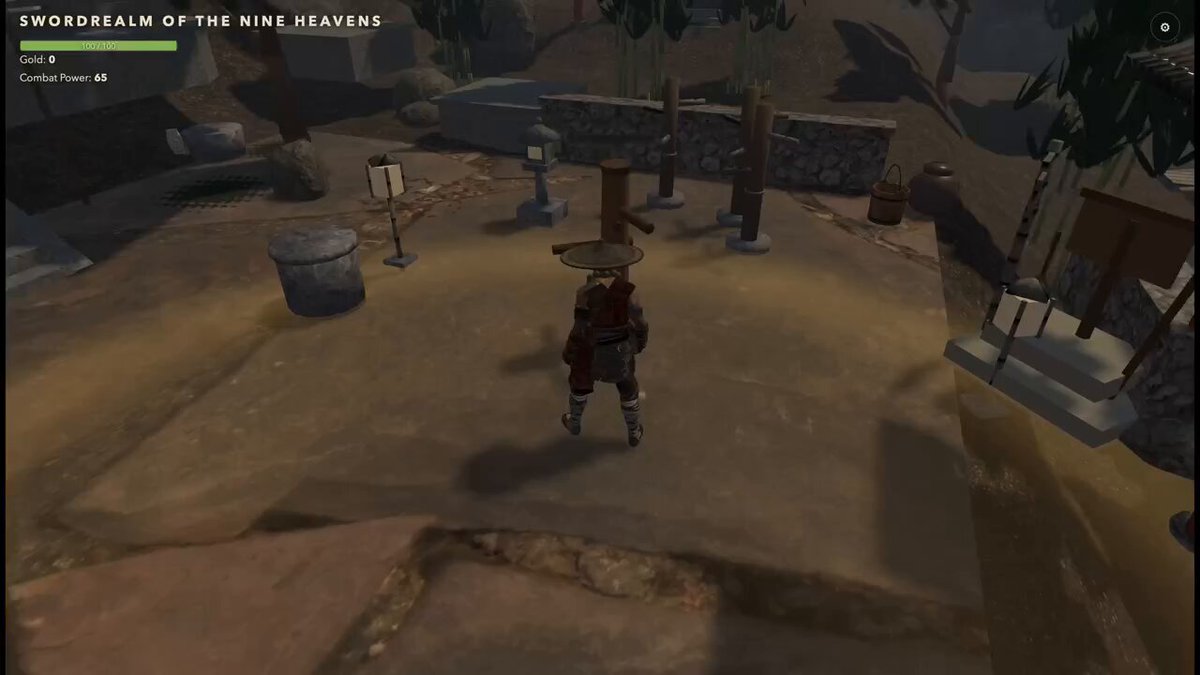 CASE 51Demo
Integrate traversal, combat, quests, inventory, weather, exploration, and 3D environment work in one game.
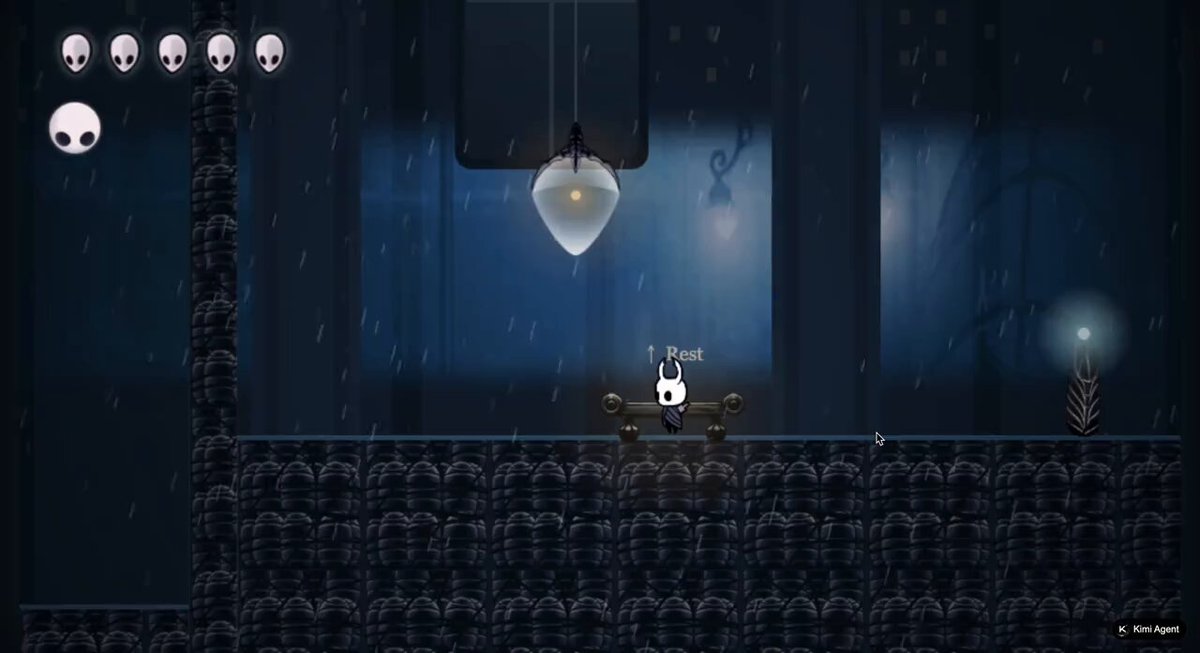 CASE 54Demo
Use existing game assets to create a playable battle between the Knight and Kimi.
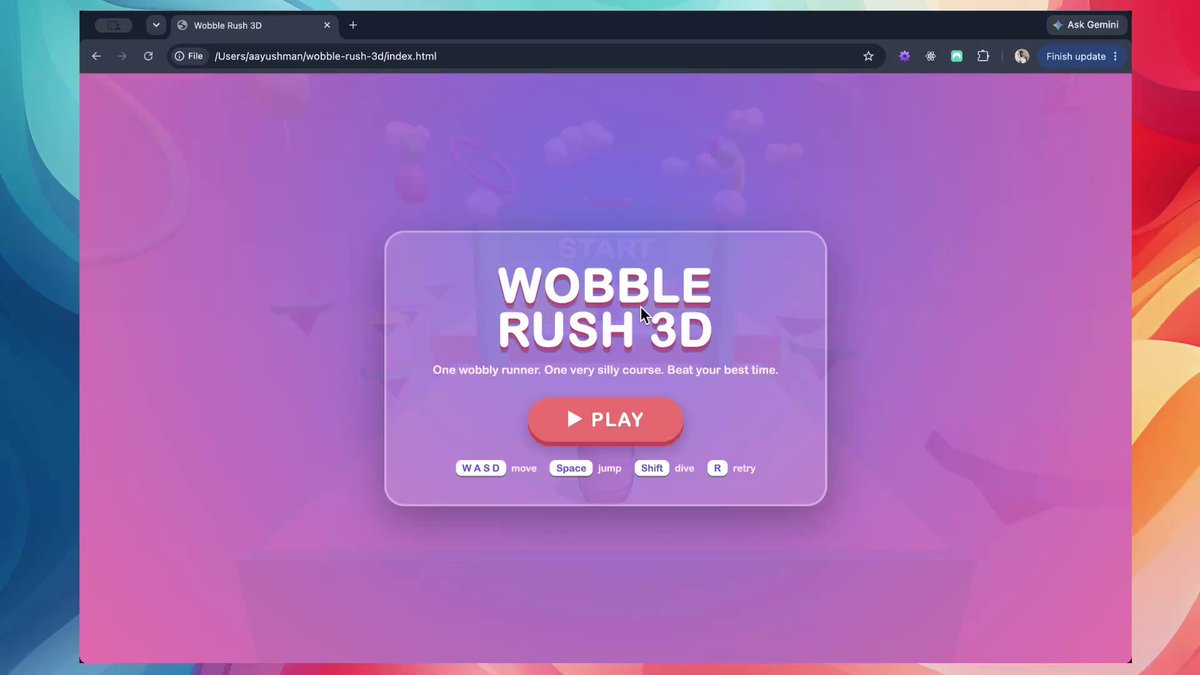 CASE 60Demo
Use a one-shot request to generate a playable 3D obstacle game and expose the project for inspection.
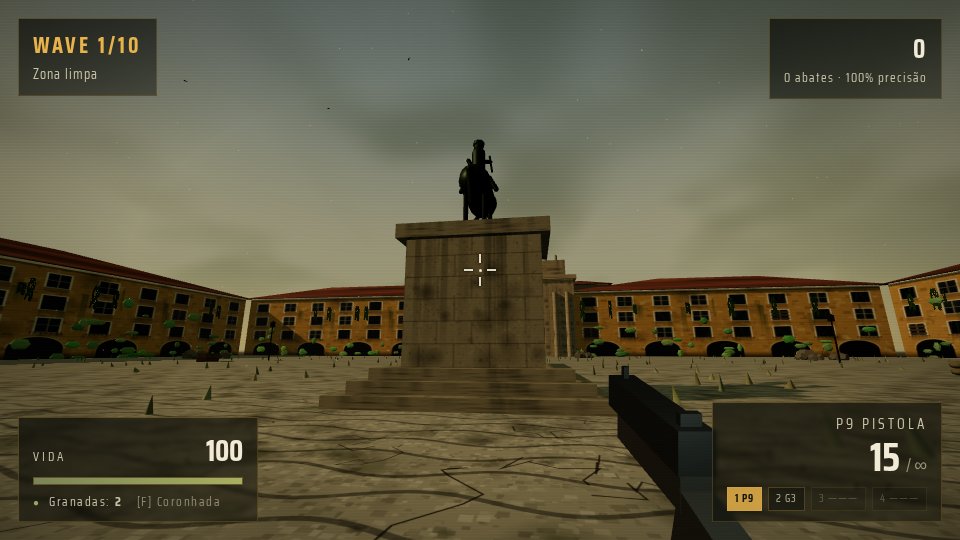 CASE 61Demo
Use a one-prompt maximum-effort run that tests, screenshots, and iterates before delivering a playable FPS.
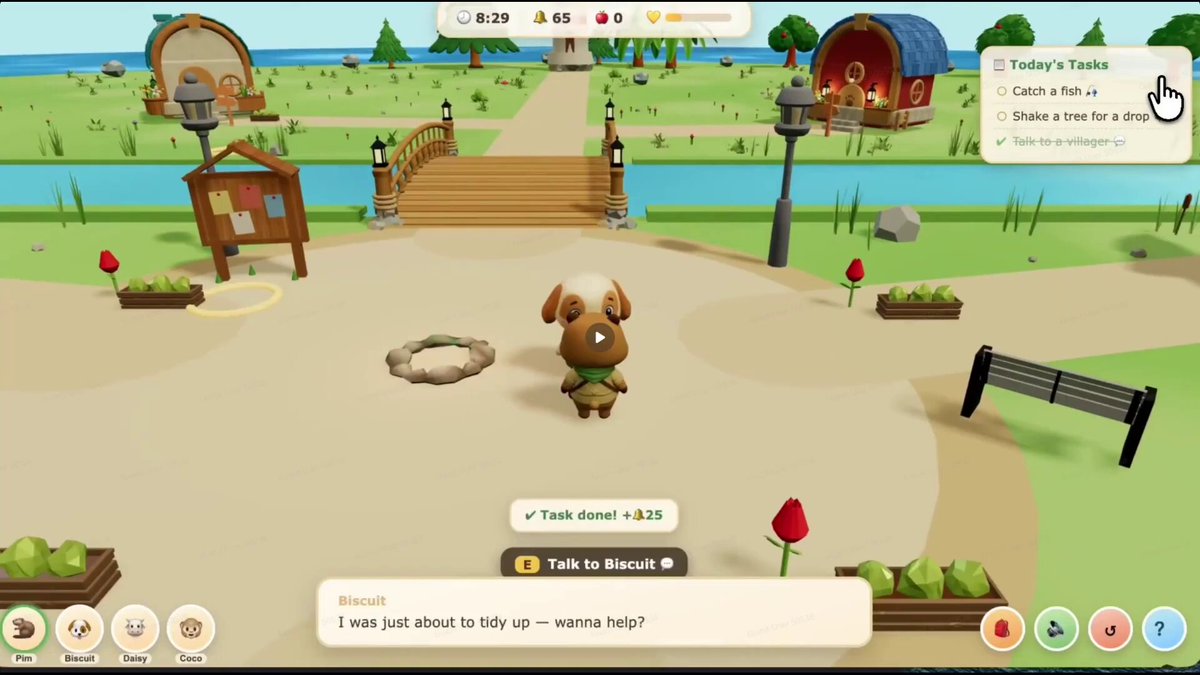 CASE 63Demo
Use a minimal game brief to inspect playability, gameplay loop, and parallax effects.
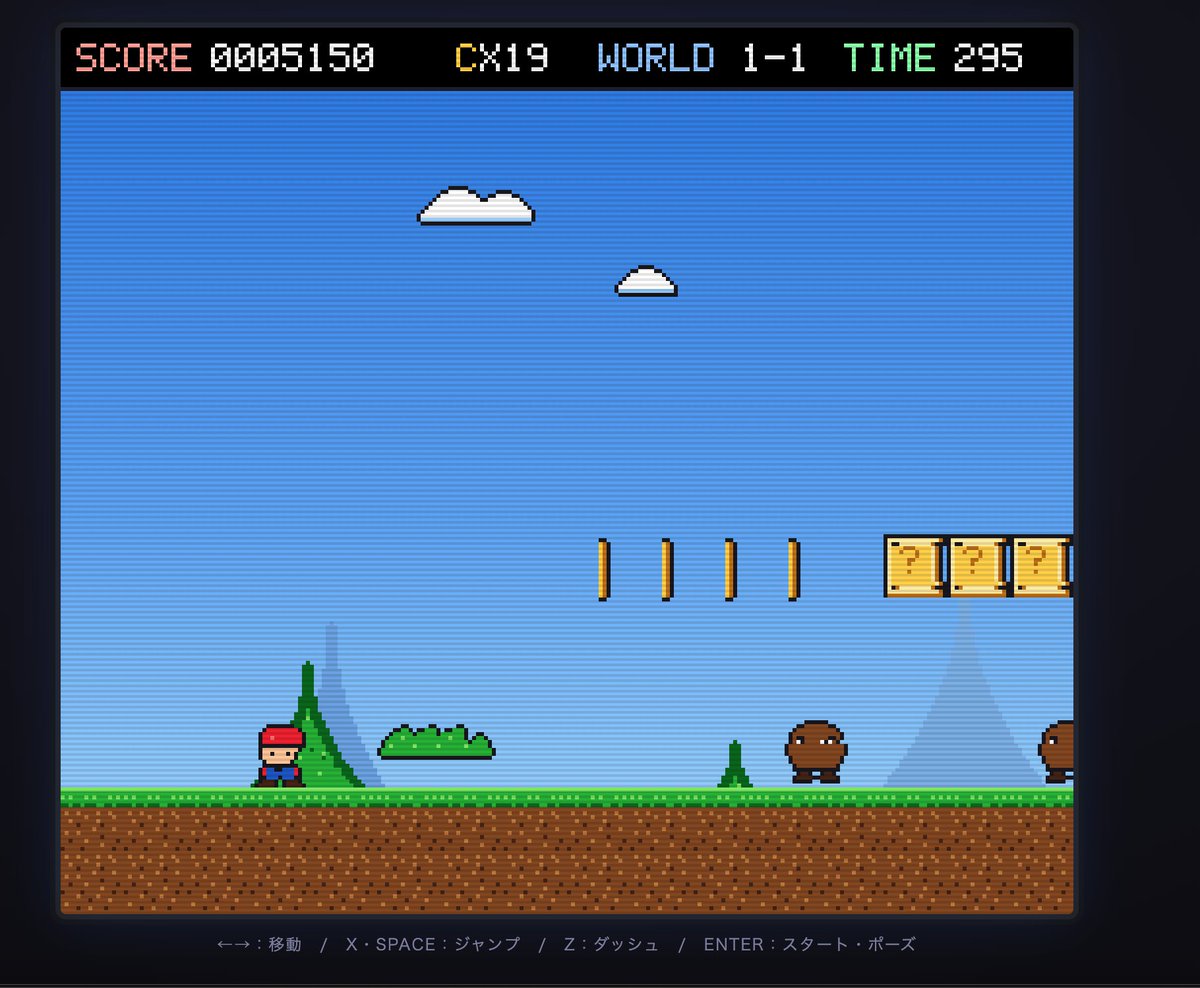 CASE 65Demo
Use a minimal one-shot request to inspect playability, stage design, pixel art, and parallax.
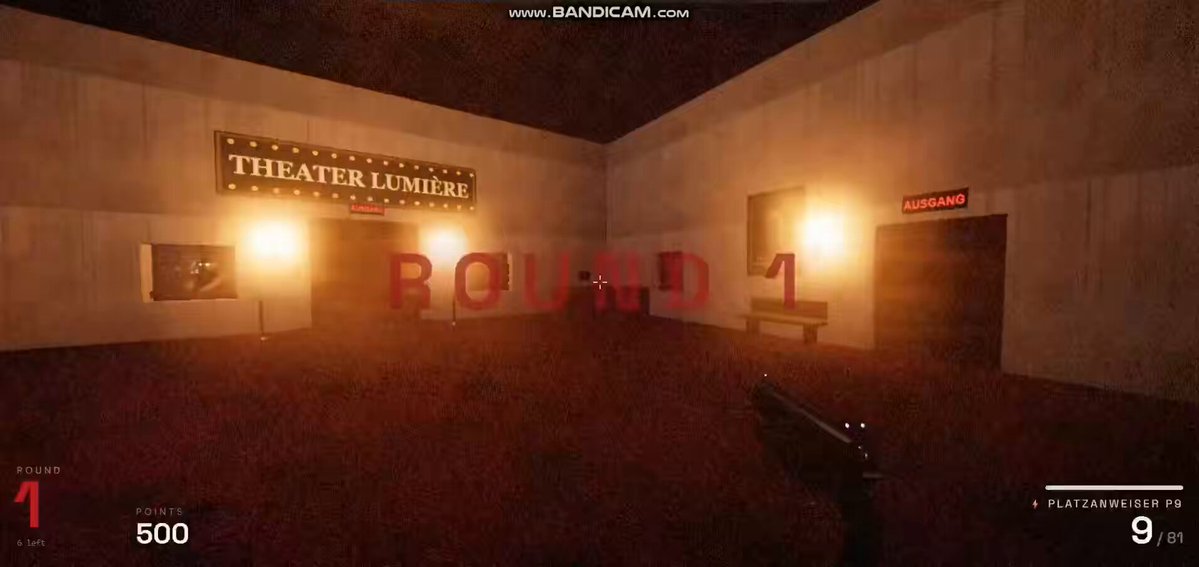 CASE 67Demo
Use a concrete zombie-shooter target to inspect a complete playable FPS artifact.
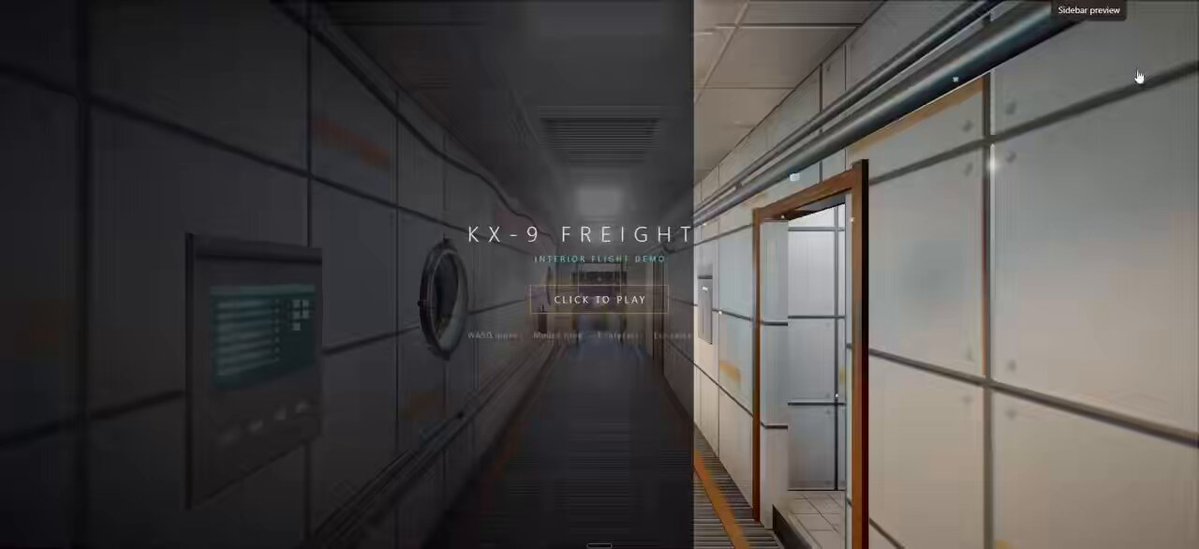 CASE 71Demo
Use Kimi K3 Standard for a first-pass indie game prototype, then compare cohesion, defects, visual polish, and token cost before choosing a model for later iterations.
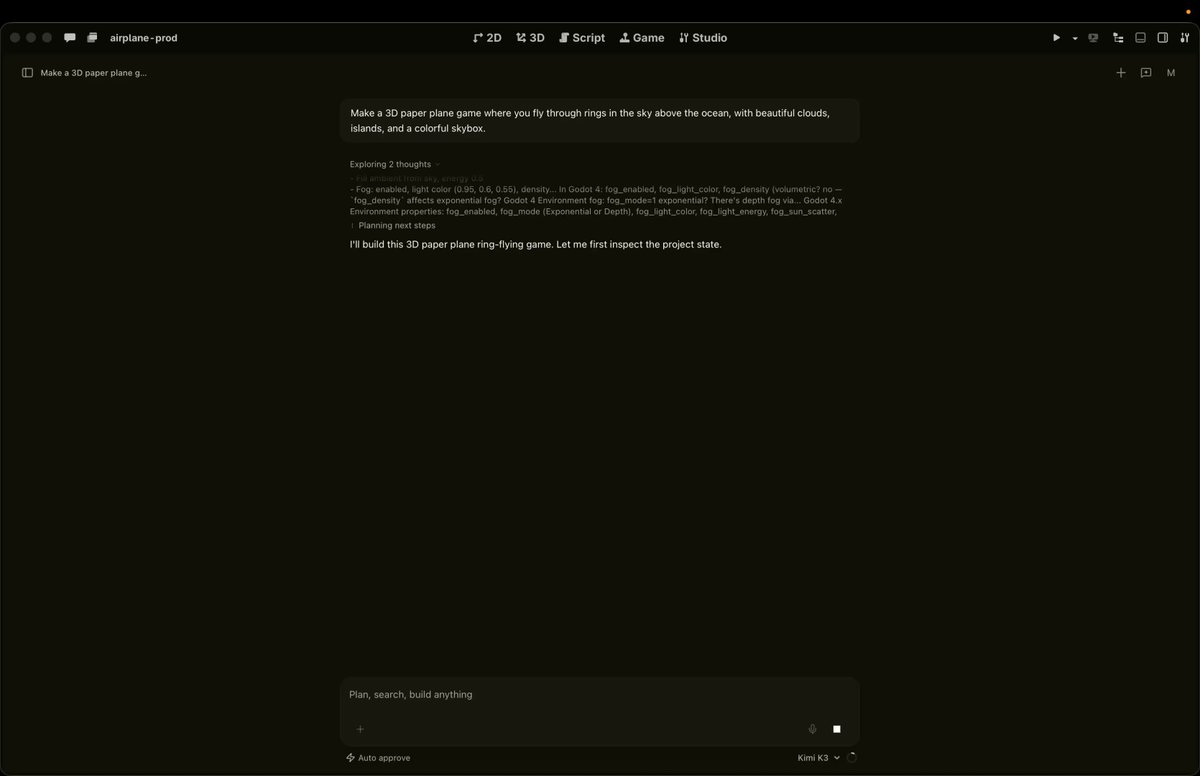 CASE 73Demo
Let Kimi K3 run a game, inspect screenshots and logs, and fix visible defects inside one engine session instead of stopping at initial code generation.
 CASE 77Demo
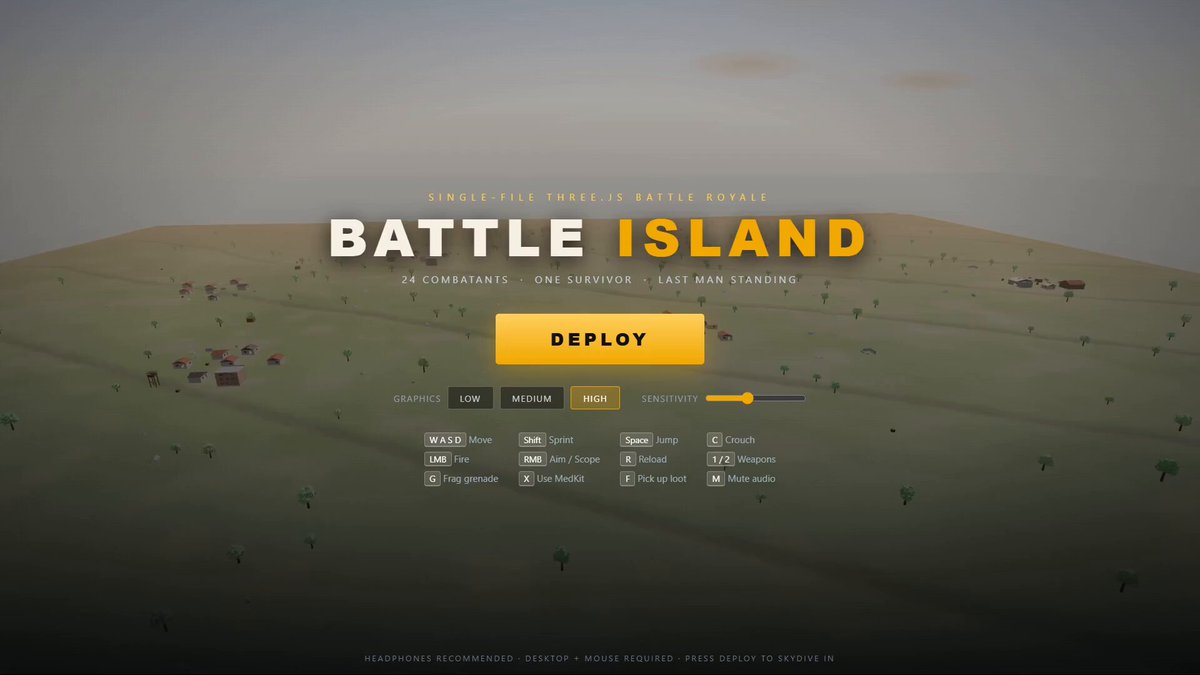
Expect long autonomous iteration plus targeted follow-up prompts when building a feature-rich browser game instead of treating the first visible output as finished.
 CASE 83Demo
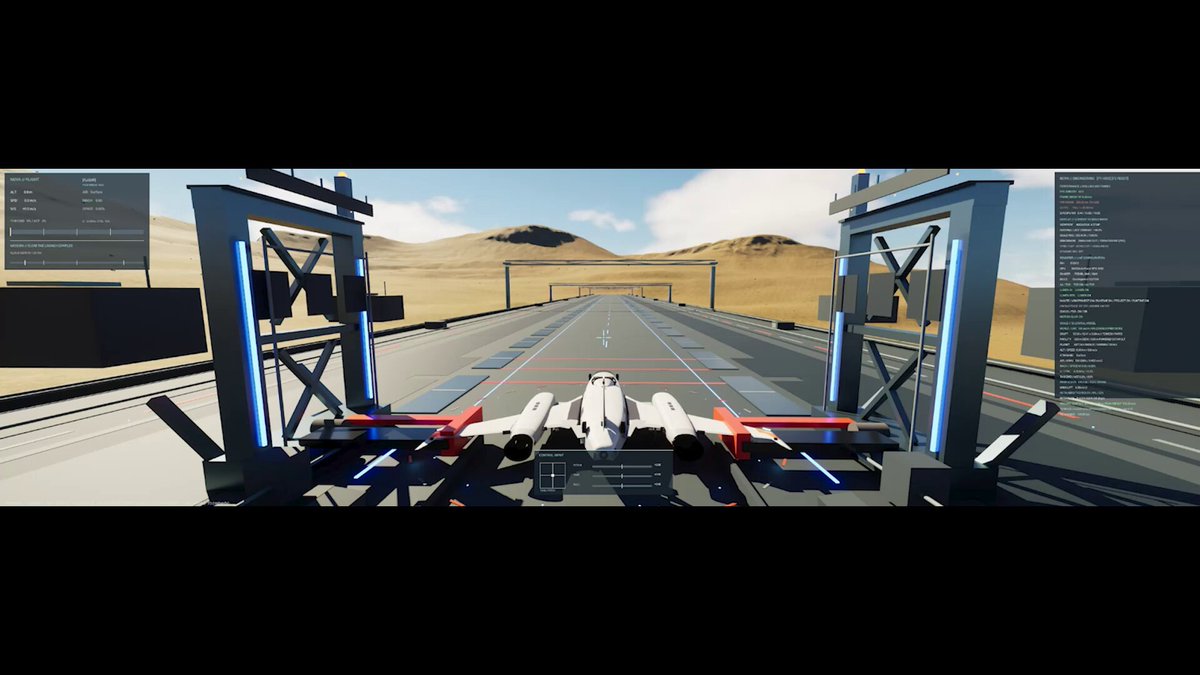
Use Kimi K3 as a long-running pass to replace placeholder terrain with a larger real-world-inspired game environment.
 CASE 84Demo
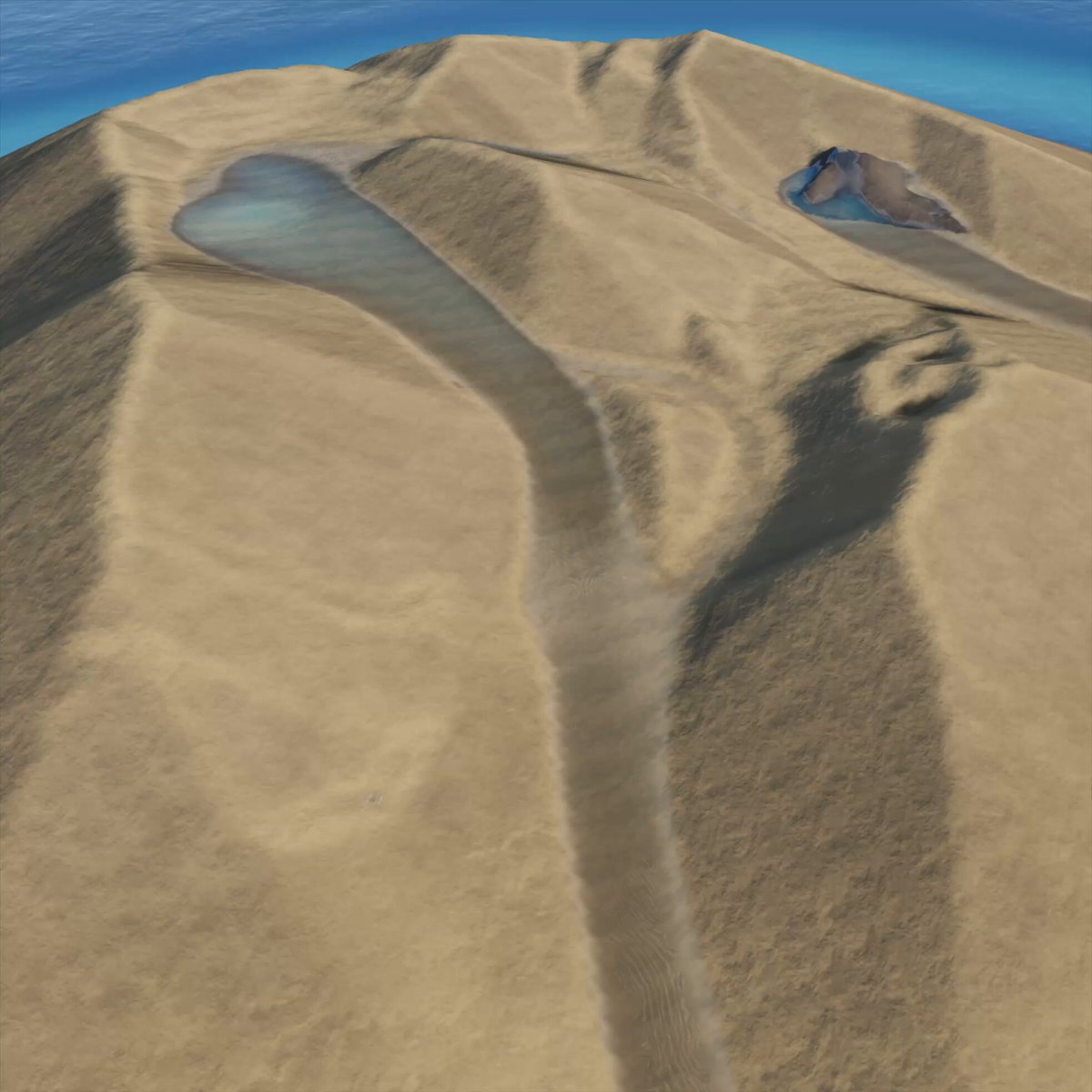
Bring Kimi K3 into a stalled Three.js physics project when the math works but the render pipeline needs progress.
 CASE 88Demo
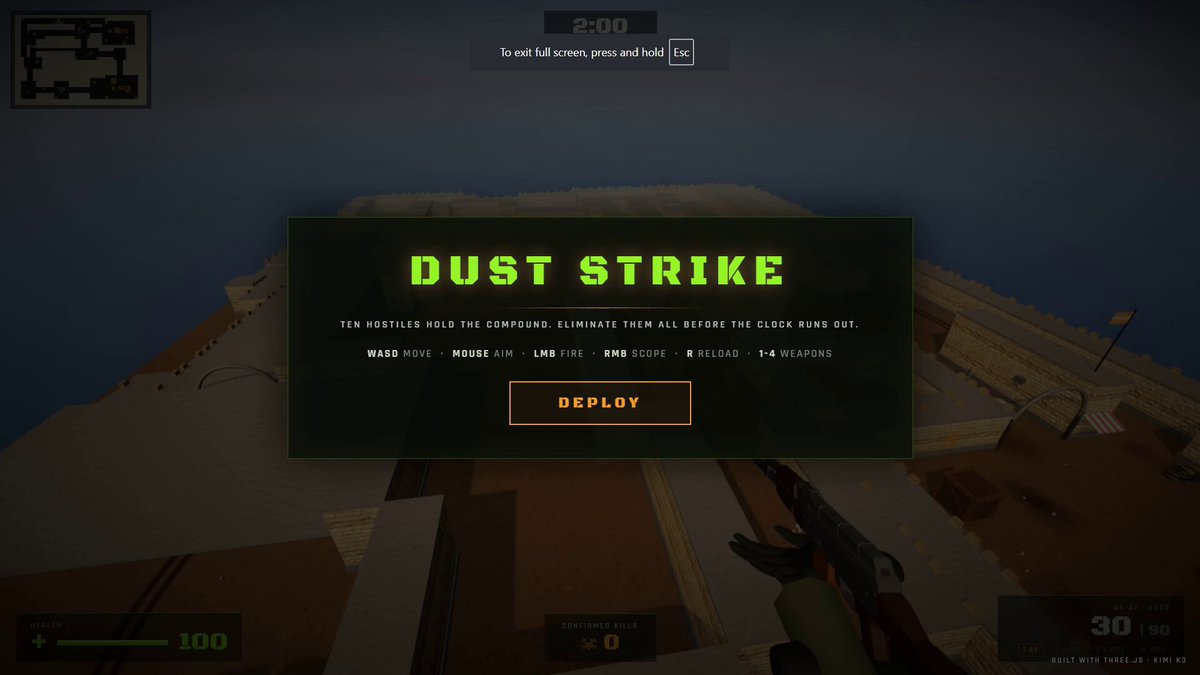
Use Kimi K3 to generate a single-file browser FPS and check whether the result covers map layout, bots, weapons, round rules, and procedural audio.
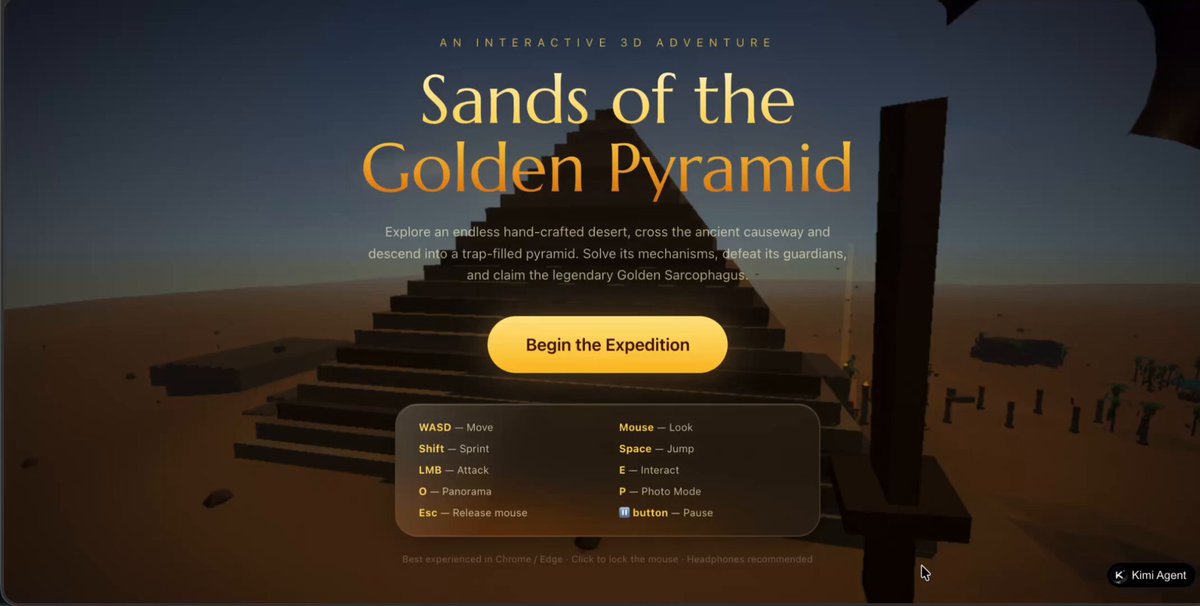 CASE 96Demo
Use Kimi K3 for a full-day 3D exploration game pass, then inspect quest, interior, and exploration scope before judging quality.
 CASE 101Evaluation
Compare one-shot Minecraft game depth, graphics, speed, and subscription value when testing Kimi K3 against Fable 5.
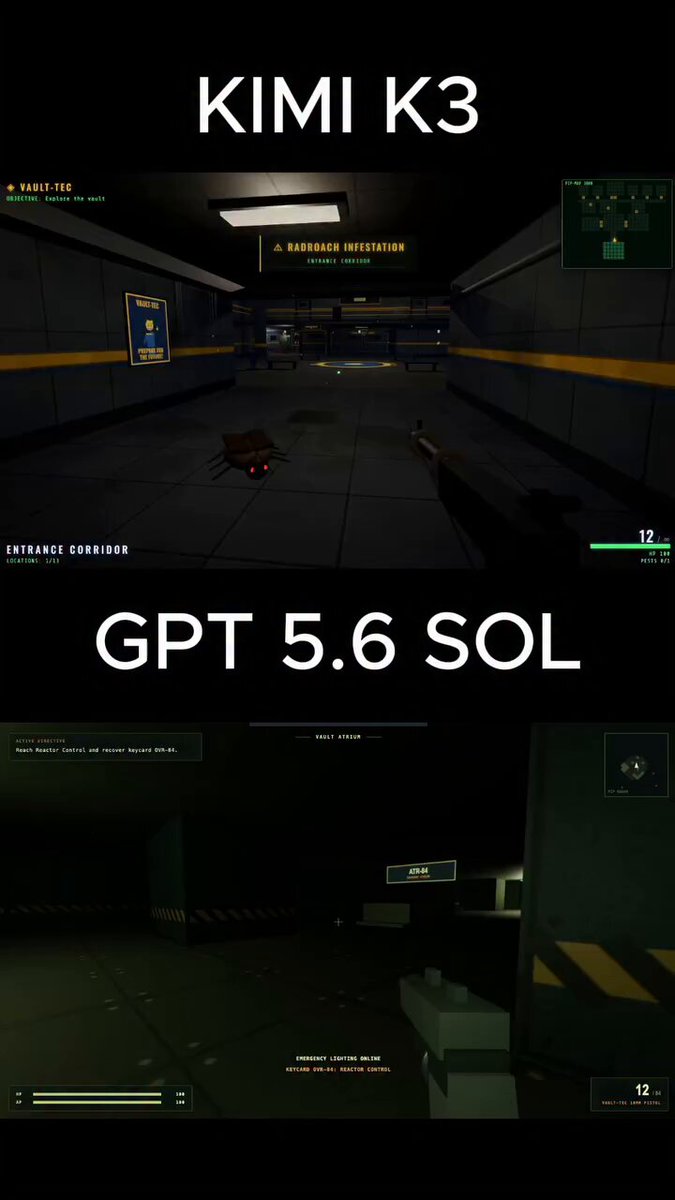 CASE 102Demo
Use a three-shot Fallout-style FPS build to estimate playable game scope and token-cost tradeoffs for Kimi K3.
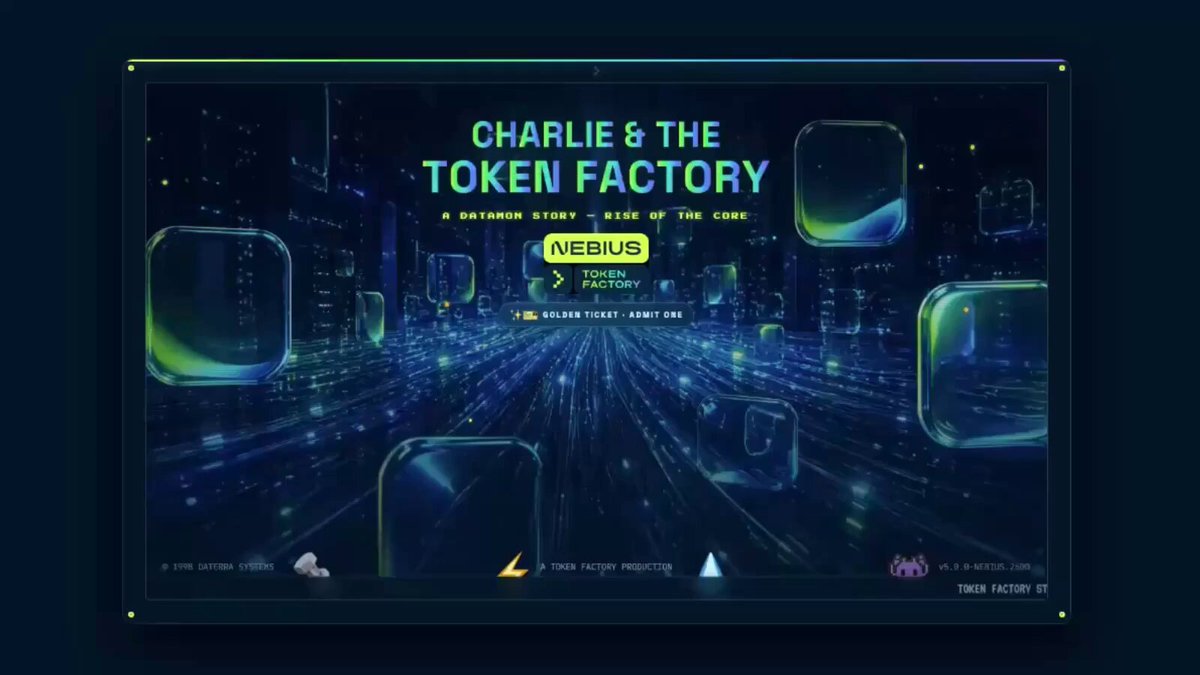 CASE 105Demo
Study how a lead-agent workflow used Kimi K3 to turn a two-sentence brief into a full browser RPG with QA loops.
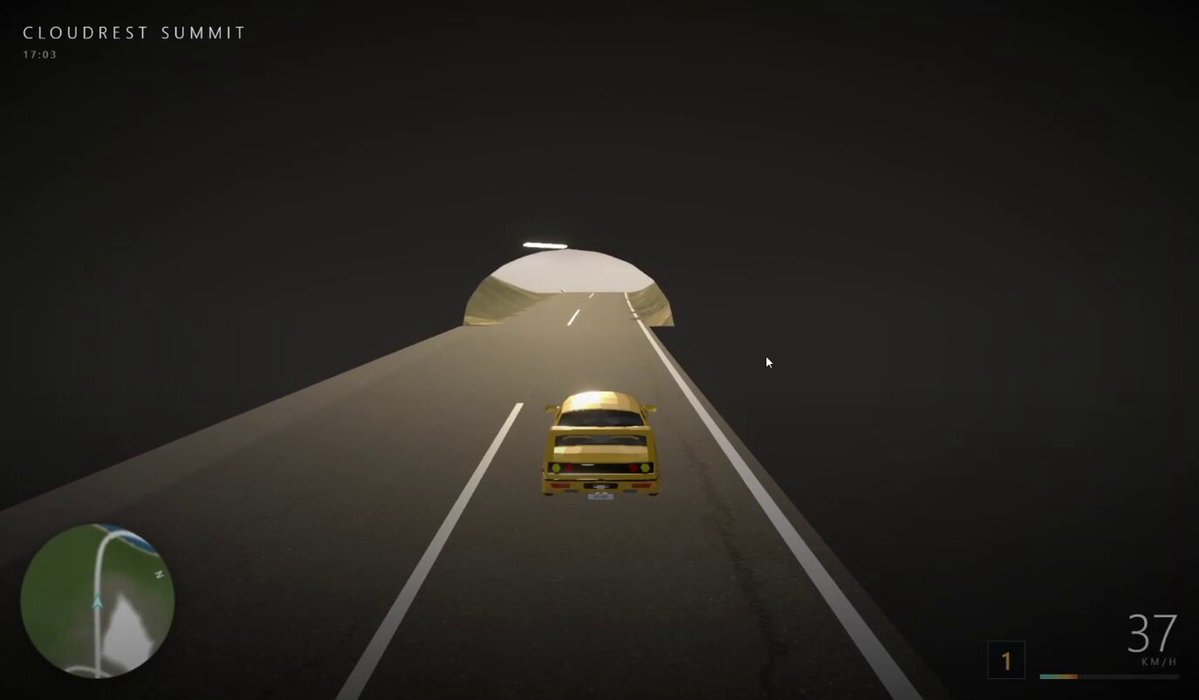 CASE 108Demo
Use Kimi K3 to prototype a 3D car game with external assets, water, weather, roads, and day-night cycling.
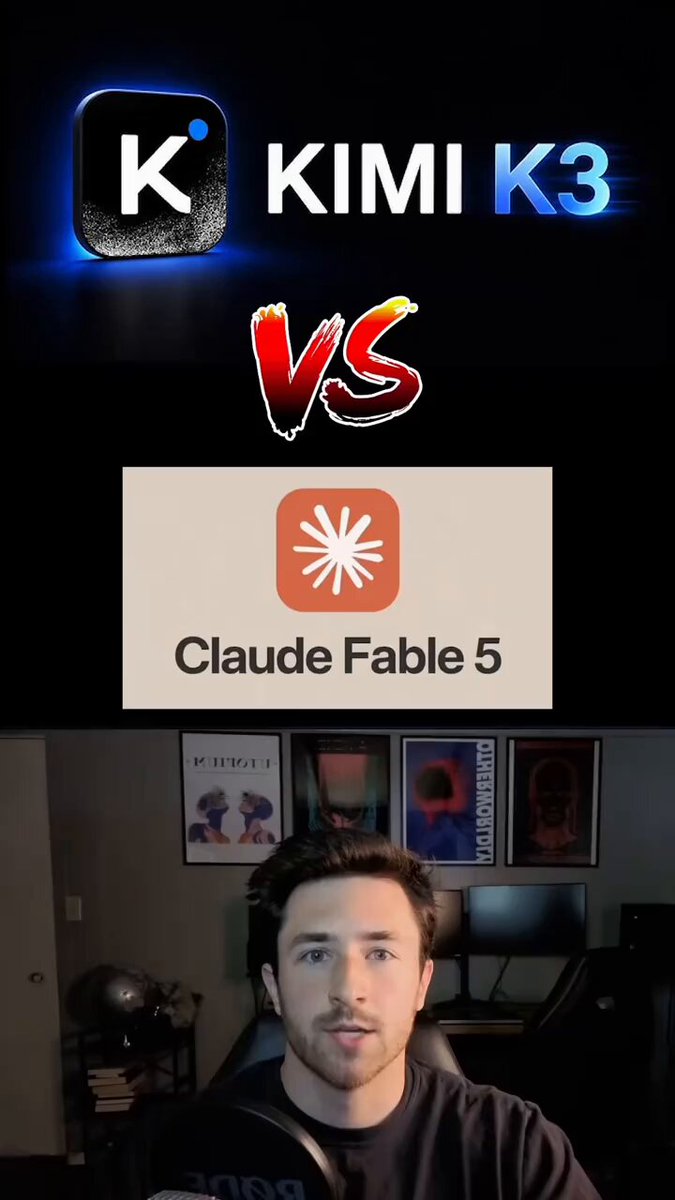 CASE 111Evaluation
Compare same-brief game builds to decide whether Kimi K3 is strong enough for playable mobile-style prototypes.
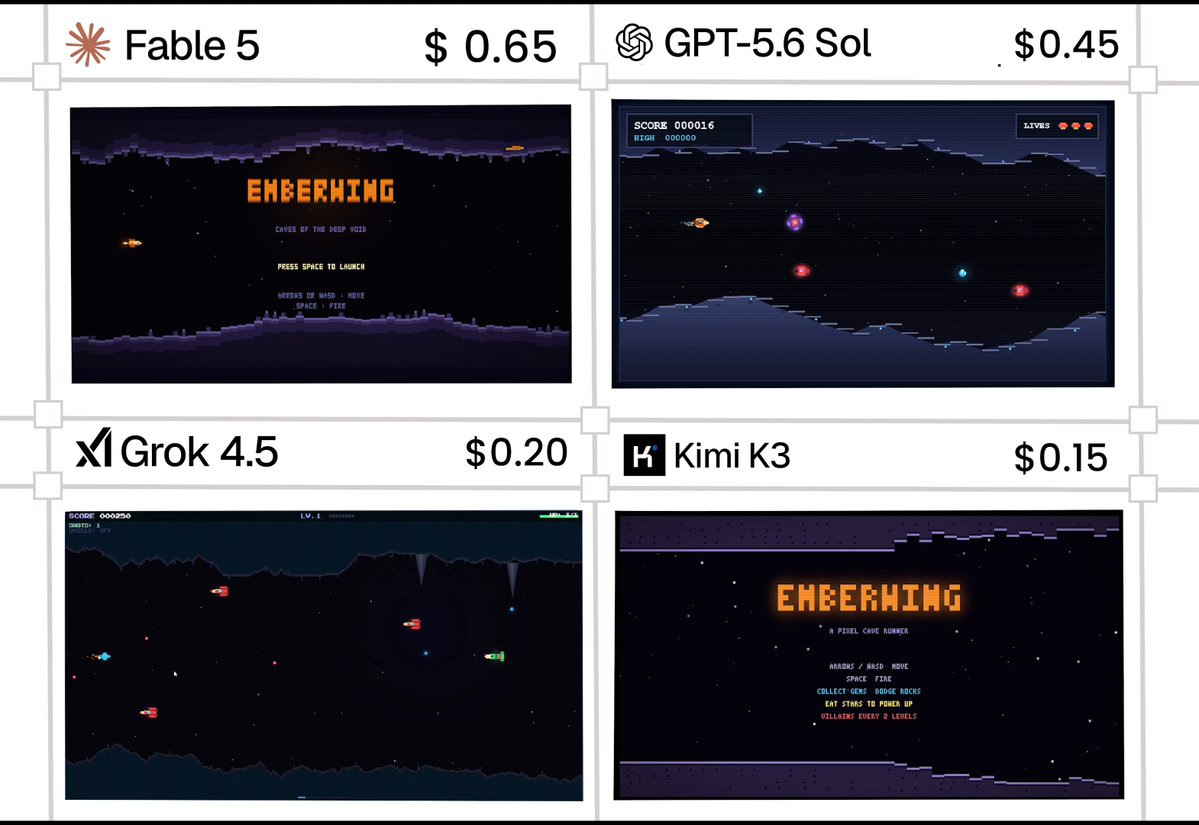 CASE 112Evaluation
Use a multi-model Command Code design run to compare Kimi K3 gameplay features and per-model cost.
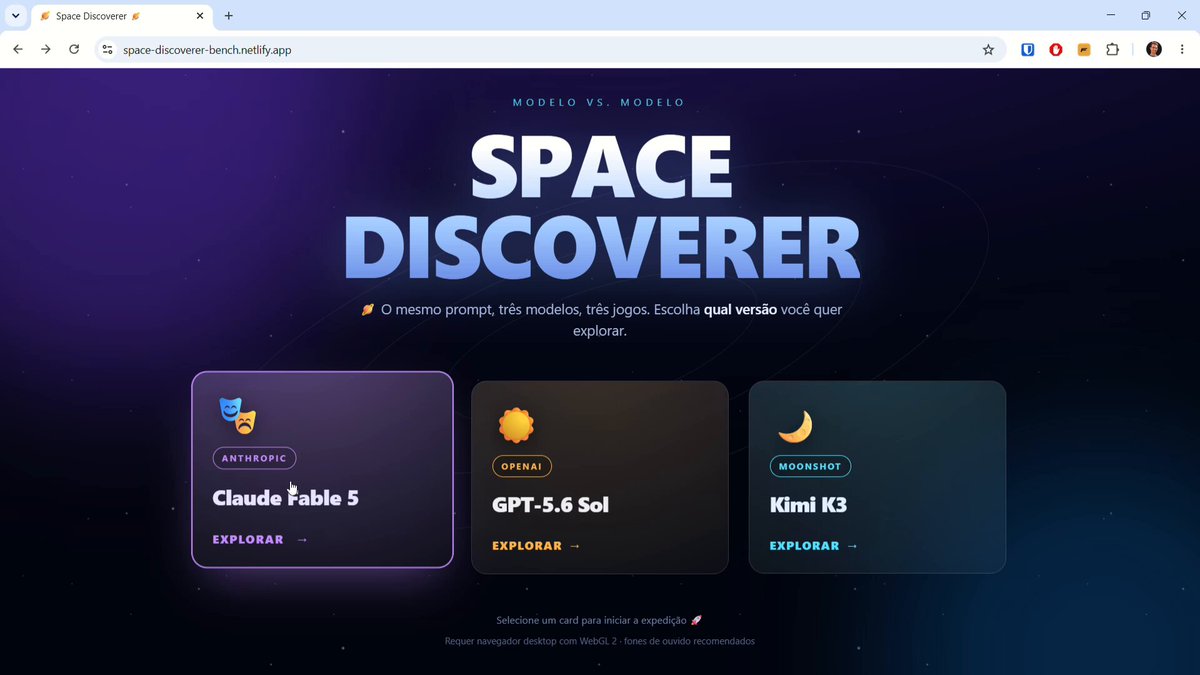 CASE 116Benchmark
Use the Space Discoverer mini-benchmark to compare model outputs on a generic 3D browser-game brief.
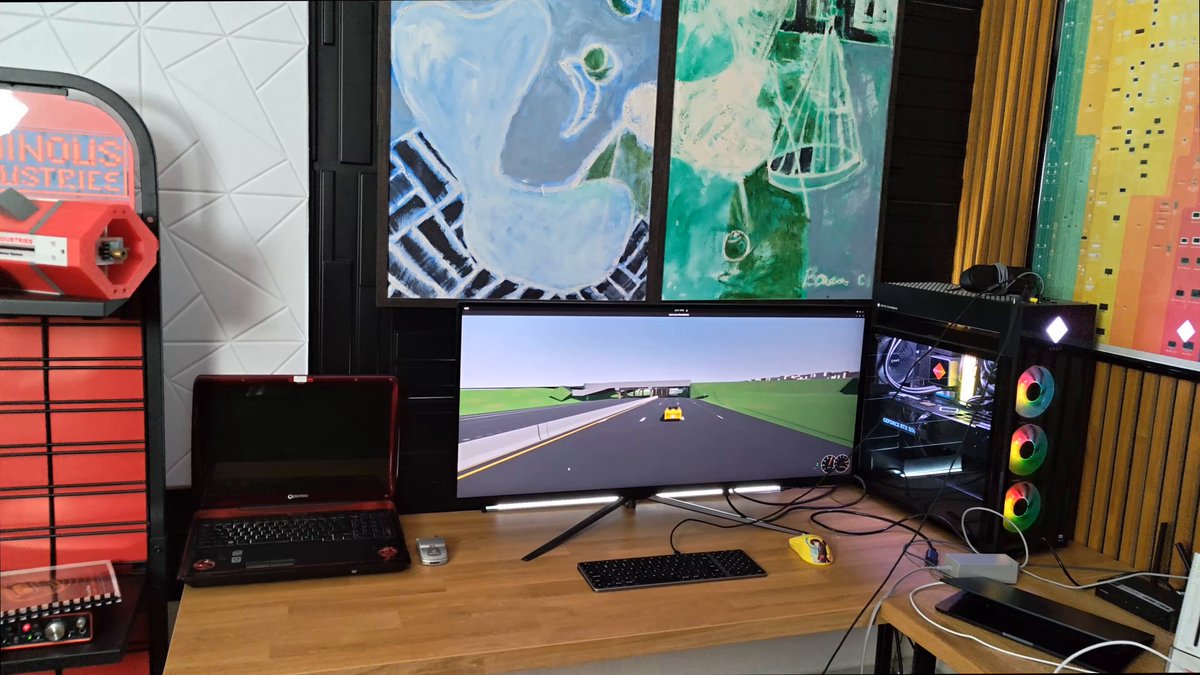 CASE 117Demo
Prototype a driving game by pairing Kimi K3 with Blender and Godot around a real local road map.
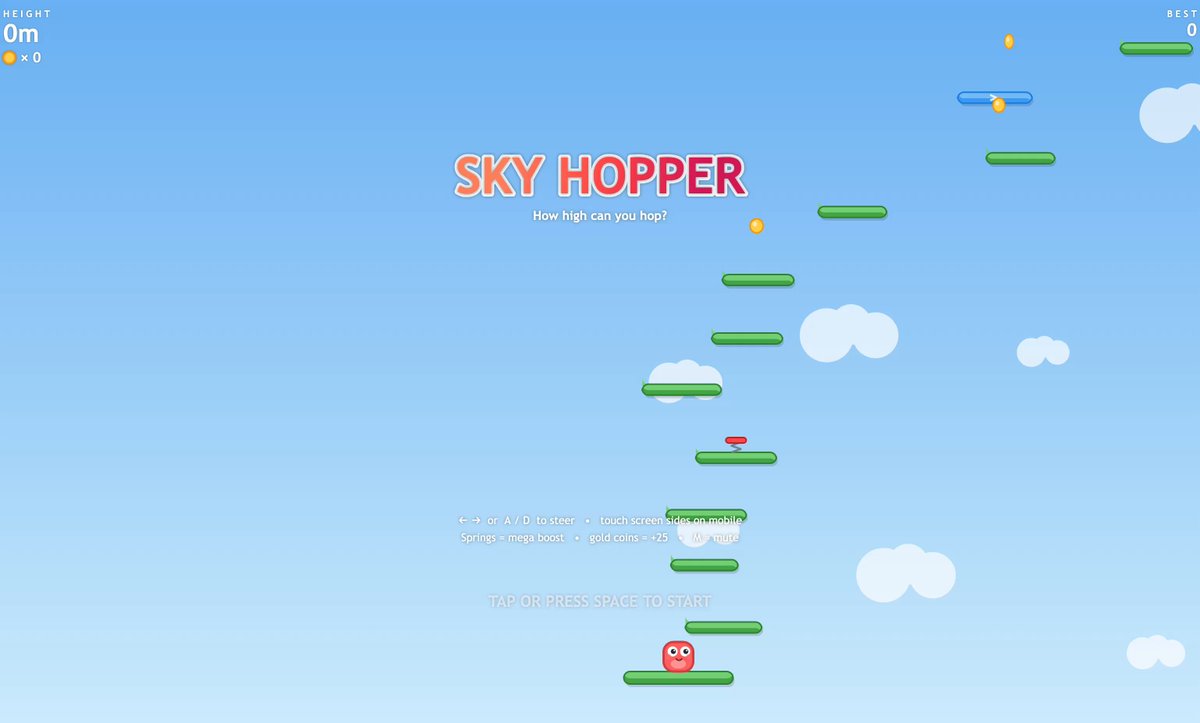 CASE 122Demo
Use a concise game brief to test whether Kimi K3 can return a one-file browser prototype.
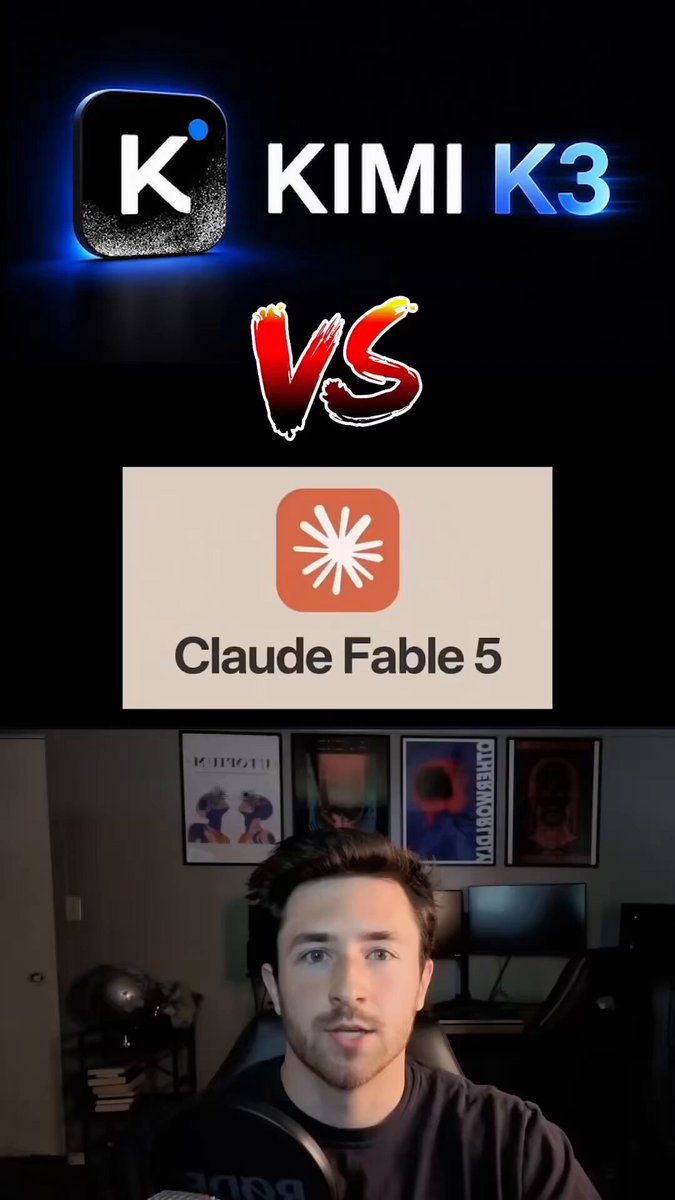 CASE 127Benchmark
Pair a Kimi K3 game build with solver and browser playtest automation before treating it as a finished prototype.
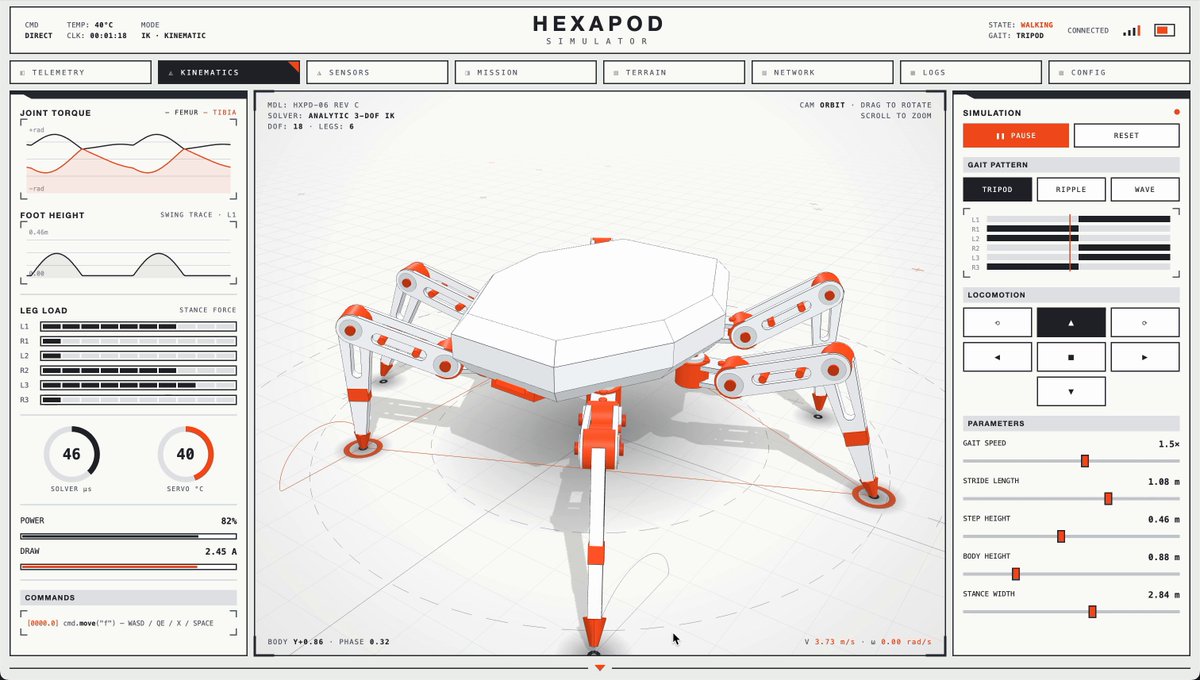 CASE 132Demo
Use Kimi K3 to prototype robotics simulators with inverse kinematics and gait logic before moving toward physical servo tests.
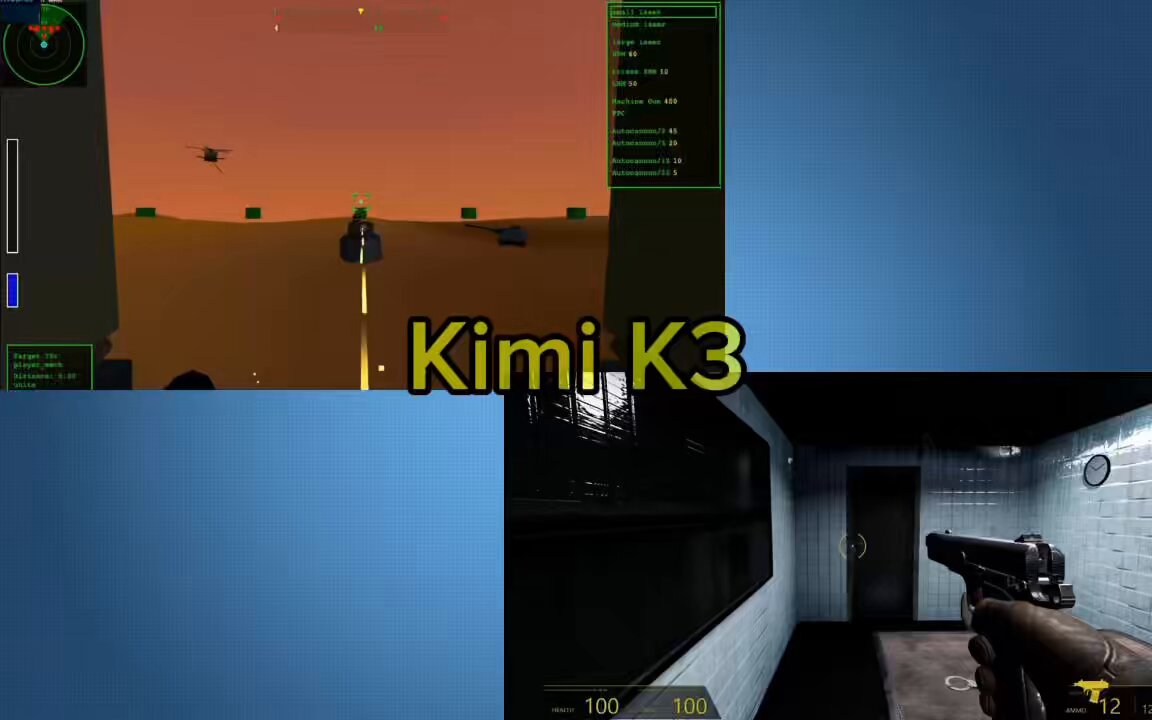 CASE 138Integration
Use Kimi K3 to build a feedback harness that records gameplay, analyzes it, adjusts parameters, and reruns tests.
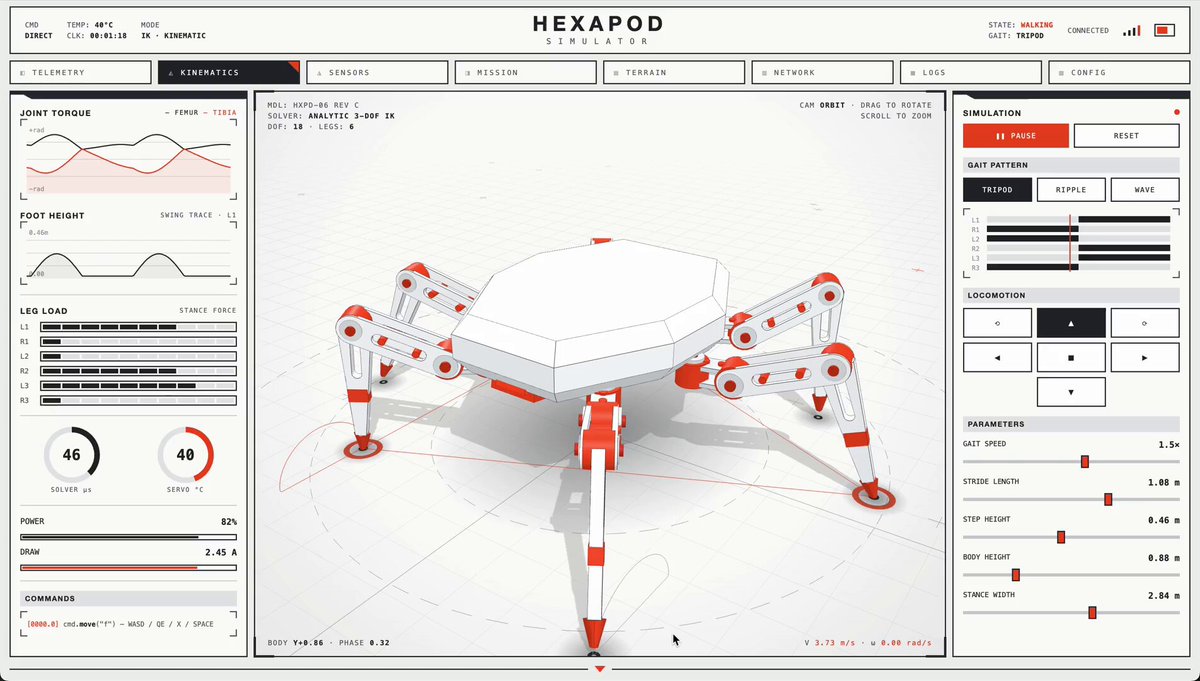 CASE 140Demo
Use Kimi K3 to prototype a 3D hexapod simulator with inverse kinematics, gait planning, and real-time leg trajectories.
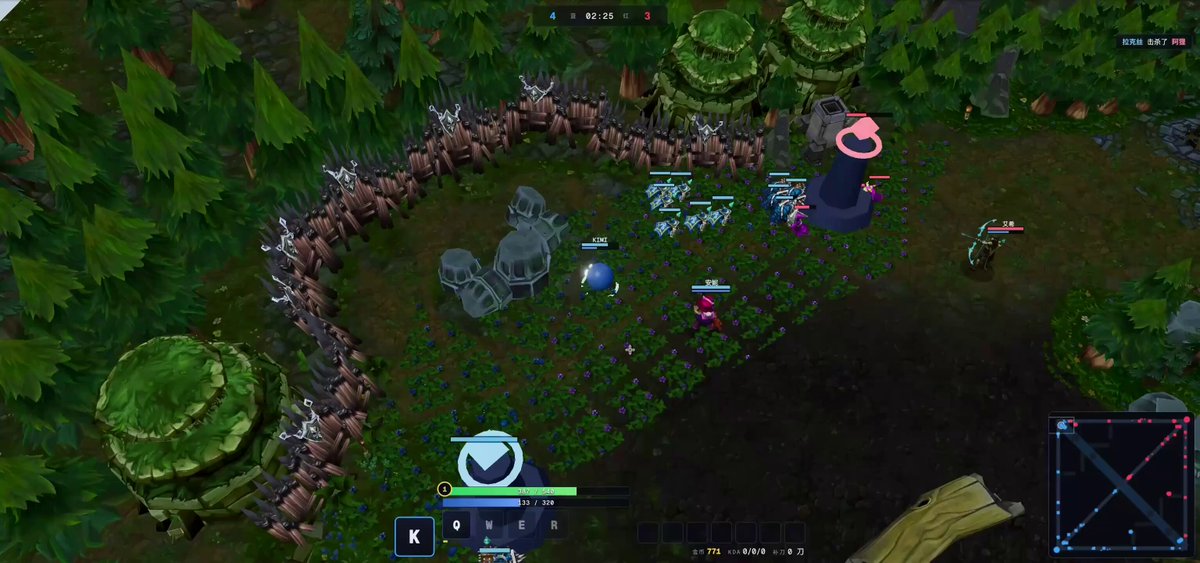 CASE 143Demo
Use Kimi K3 to inspect whether a single generated game loop can cover lanes, minions, tower aggro, abilities, cooldowns, and a nexus win condition.
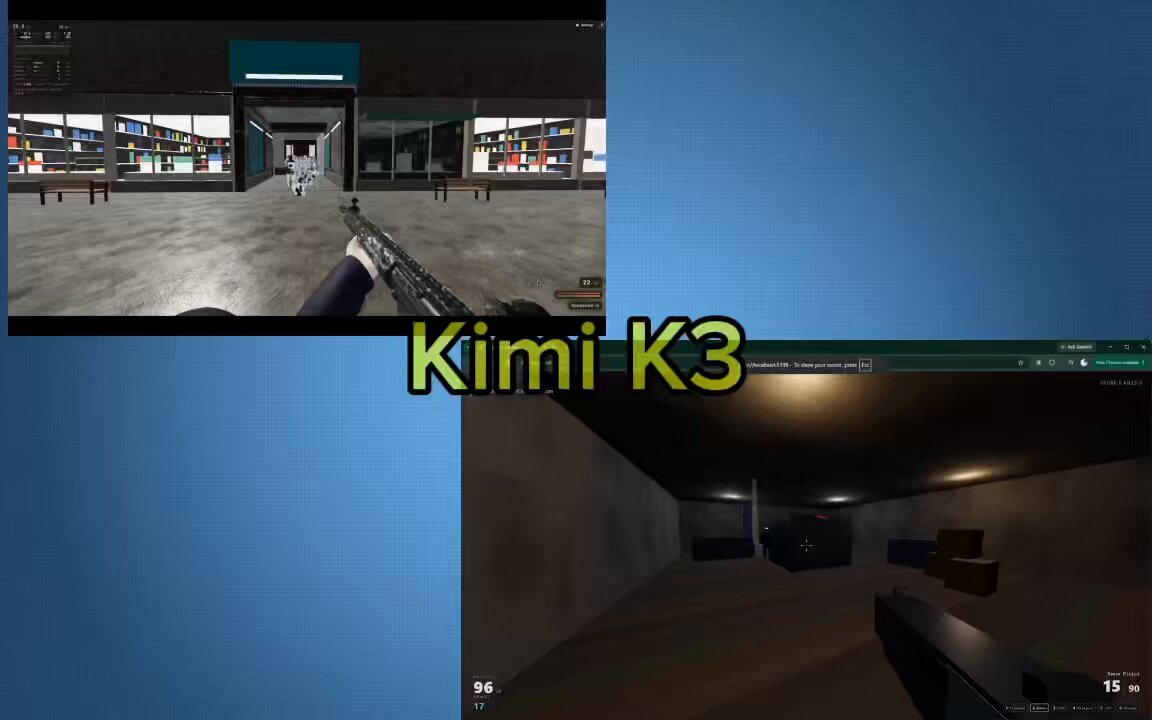 CASE 146Integration
Use Kimi K3 for iterative game development when an existing Three.js project needs a new level section and lighting pass.
 CASE 148Evaluation
Compare Kimi K3 web and API runs when testing a full 3D FPS prototype with objectives, enemy AI, custom weapons, weather, and procedural terrain.
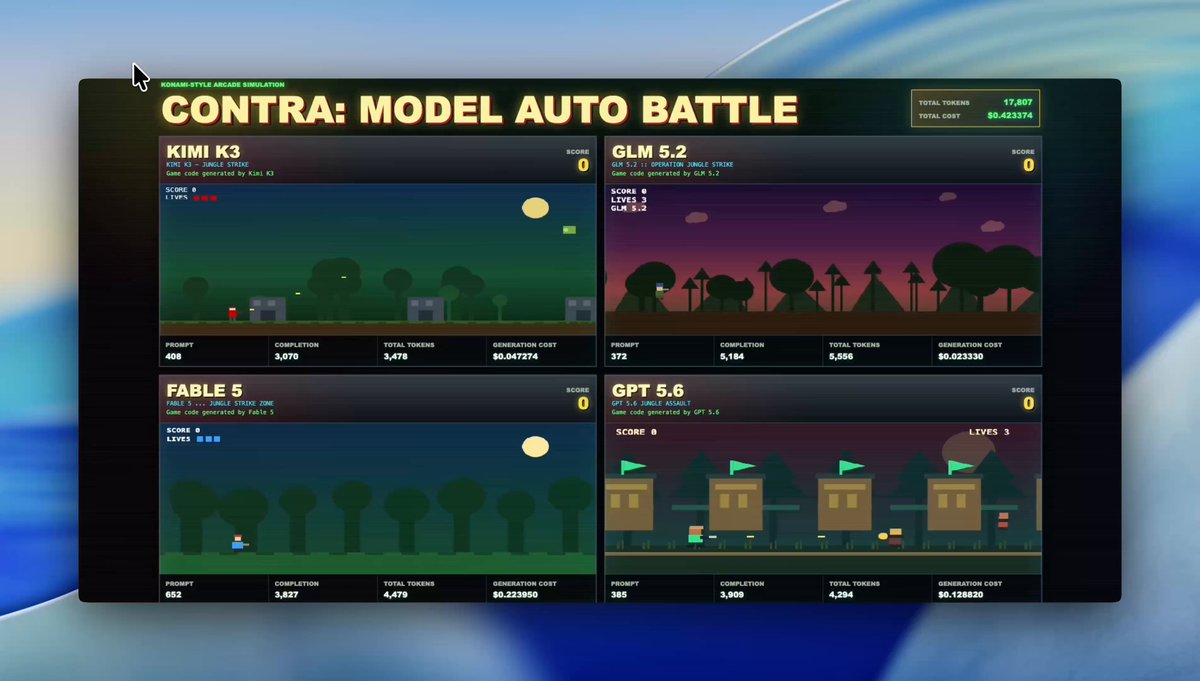 CASE 149Benchmark
Use a Contra-style auto-play benchmark to inspect whether Kimi K3 can produce lean playable Canvas game code with low token cost.
 CASE 150Benchmark
Use one-, ten-, and sixty-minute GTA-style build runs to inspect how extra Kimi K3 generation time changes playable scope and cost.
 CASE 151Integration
Use Kimi K3 with Blender MCP when an empty viewport needs Python scene construction, camera placement, materials, lighting, and iterative preview correction.
Showing 48 / 169
BUILD WITH EVOLINK / 04
Connect to the model through EvoLink and build from directions already demonstrated in public.