
Seedance 2.5 has been on Jimeng for almost a week now. How good is it? Just look at these three completely different demos
The product presentation closest to a finished commercial https://x.com/Hss1128_/status/2083509466725802172
A vlog you can't tell from real footage, running as long as a full minute https://x.com/sulfurscales/status/2084256472322781622
Anime character consistency and style that stay remarkably stable, holding the character and the retro-anime texture across multiple shots https://x.com/jboogx_creative/status/2084581050991448160
TVCs, vlogs, anime: content that used to need entirely different production pipelines can now come straight out of Seedance 2.5 at a pretty high level of finish. But the better the results get, the more real another problem becomes: It's expensive!!!
At current usage costs, one 30-second 720p video runs about 15 US dollars, close to 100 yuan! If one generation gets you a usable result, that money isn't outrageous. What really burns cash is a prompt that wasn't written clearly
The person and the frame look great, but the shot rhythm is wrong, so it's unusable; the action completes, but the character's face changes halfway, the outfit switches, or an extra person appears, so it's unusable; you uploaded several reference images, but the model doesn't know which one is responsible for the character, which for the product and which for the environment, so it's still unusable!
One failure is close to 100 yuan, and even blurry 480p costs 50?!
The Seedance 2.5 prompt guide I (Lin Yueji, 林悦己) want to share next isn't the kind that "tells you to sprinkle in a few more words like cinematic, 8K and smooth camera movement". What users actually need to solve is how to make the model understand, before it generates, what this video is for, which parts must stay stable, when each action happens, and where the camera ends up
To answer that question, I compiled close to 200 public Seedance 2.5 prompts. You can browse the prompt library here: https://evolink.ai/seedance-2-5-prompts?utm_source=cheerselfai&utm_medium=blog&utm_campaign=seedance25
After breaking down the exact wording of the Top 50 by engagement, what turned out to be worth copying wasn't any one especially long prompt, but a set of combination formulas you can reuse again and again
Seedance 2.5 Prompt = 1 expression structure + the control strategies the task requires + a clearly defined content genre
Expression structure: decides the order in which the model takes in information Control strategy: decides which of the character, assets, timing, camera, action, sound and style can be left to the model and which must not go wrong Content genre: what the model ultimately has to deliver, whether a vlog, TVC, anime, documentary, MV or a stretch of action movie
What this formula does isn't make the prompt look more professional; it reduces information conflicts, so the model first grasps the target of the finished piece and then executes the most important control requirements.
Enough talk, let's get into it!
1. Choose the right expression structure for the prompt
The expression structure is the order in which information enters the model. The same idea can be written as a single core-concept sentence, or as a story, a production spec sheet or a second-by-second shot list. Pick the wrong structure and more detail just means more ways for it to conflict with itself
Starting from real-world creation, the common structures can be sorted into 6 types. None of them is always the best; the key is choosing the most suitable one for the target of the finished piece, the precision of control and the way it's made
1 The minimal concept sentence: keep the fewest variables and leave the model room to direct
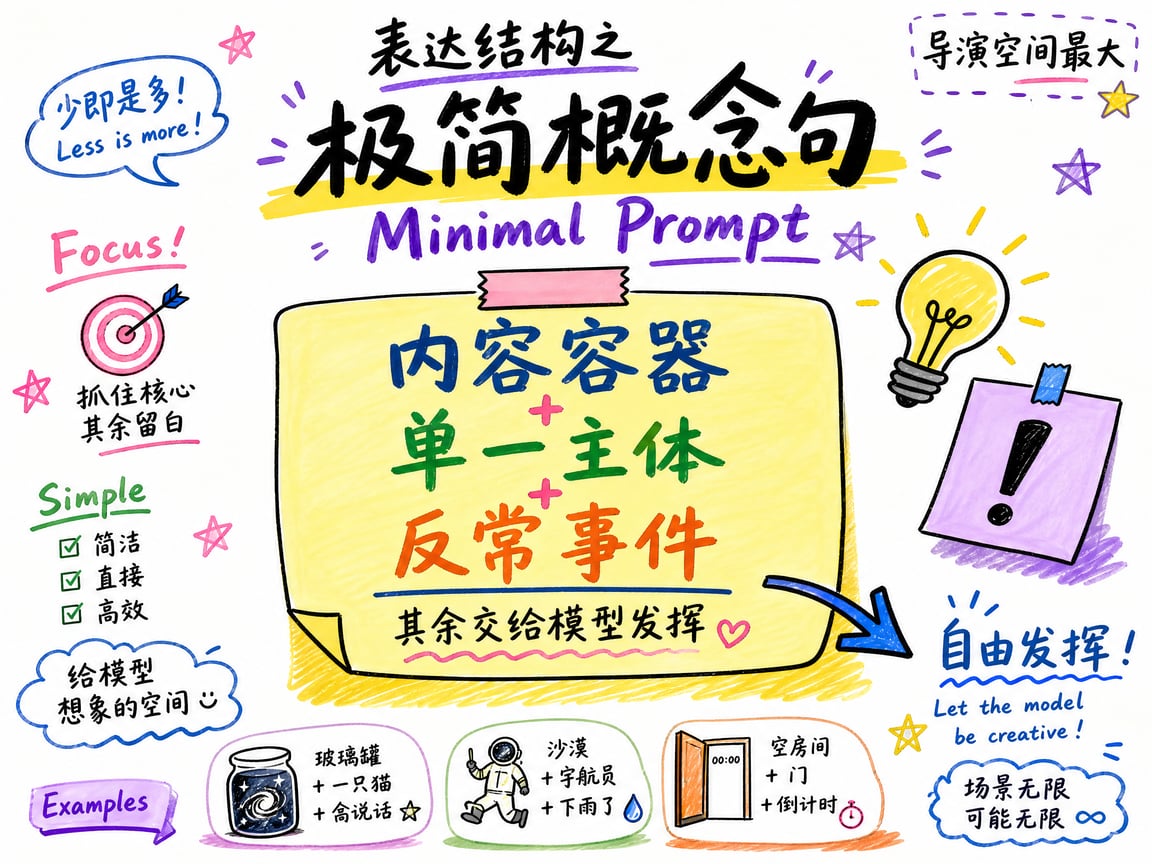
Give the model only a clear content container, a core subject and an unusual event, and hand the camera, action and audiovisual detail over to the model. Suits content where the concept itself is strong enough
A familiar content container + a single subject + an unusual event or relationship + a clear emotion or outcome + at most two necessary constraints
For example, this case keeps only the film type and the core themes of connection and community, letting the model take on almost all of the narrative and audiovisual decisions, and ended up generating a complete long video
https://x.com/arikuschnir/status/2083209950231220403
2 Continuous natural-language narrative: let the action advance along cause and effect
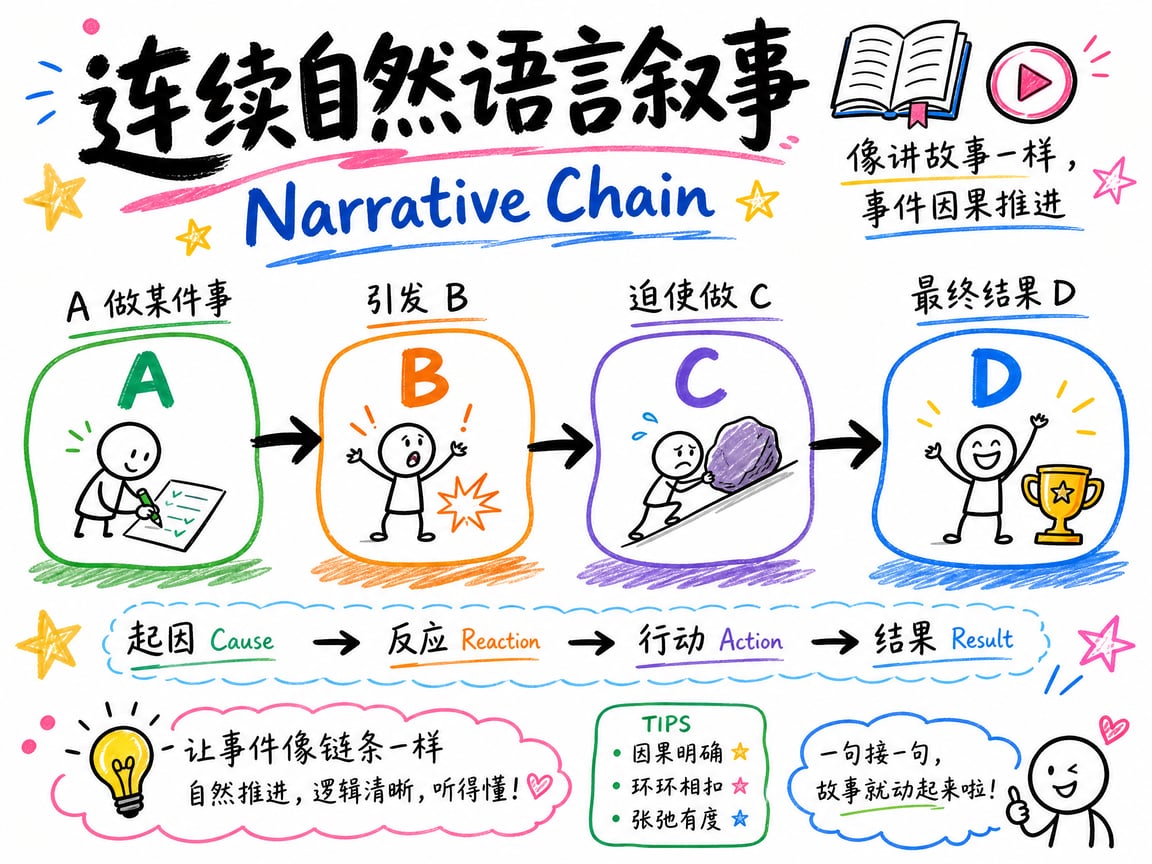
Write it like telling a story: what state the character starts in, what happens, how they react, and what outcome it leads to. The model isn't forced to execute shot by shot, but the events must have clear causality between them
Medium texture + subject and environment + calm starting point + triggering event + escalating action chain + closing resolution + necessary constraints
The action chain can be simplified further to:
Subject does A → A triggers B → B forces the subject to do C → C causes the final outcome D
This case uses continuous narrative to organise a laundry vlog: seven everyday actions all advance the same task, while the phone-footage texture, Korean dialogue and ambient sound together maintain the everyday feel
https://x.com/doctorwasif/status/2083779989414019109
3 The modular production spec sheet: give character, camera, scene and sound each their own place
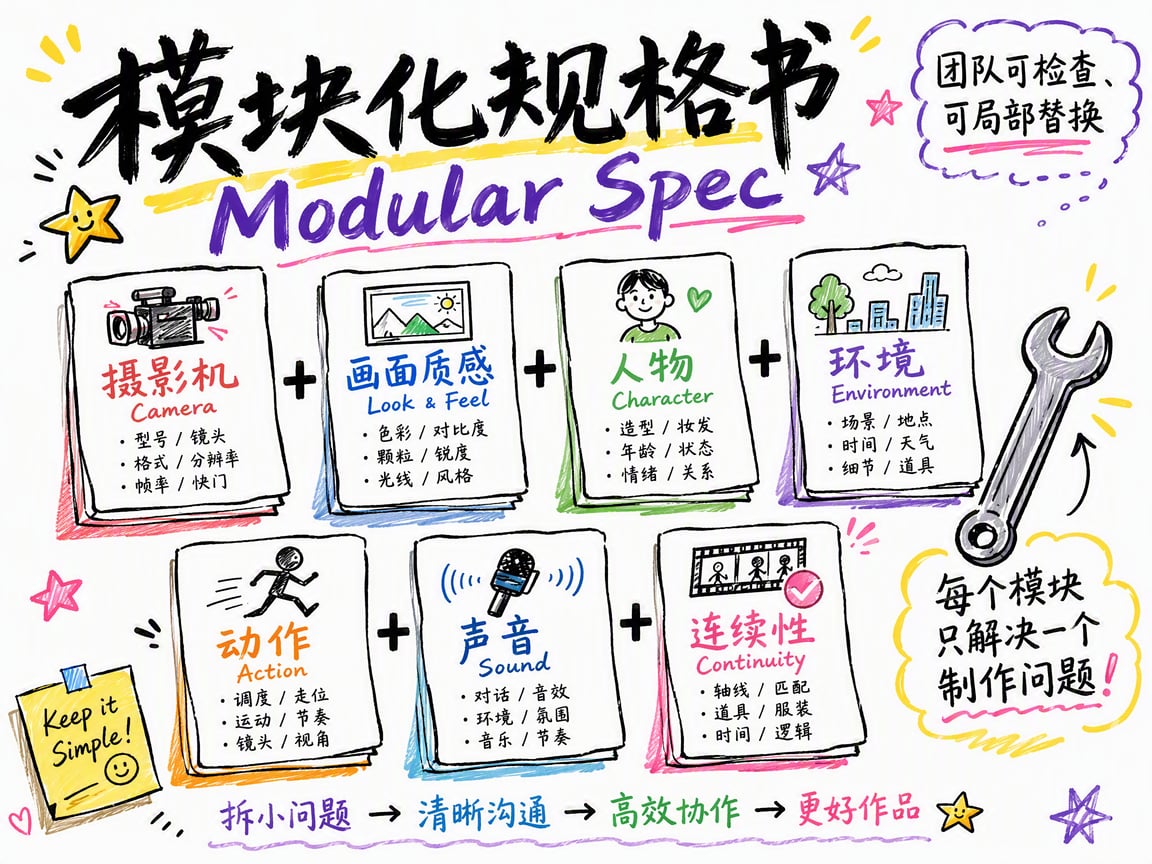
Split the prompt into modules for camera, style, character, environment, action, sound and continuity. Each module solves only one production problem, which makes it easy for a team to check and swap out parts
Deliverable spec + camera + image texture + subject + environment + action + sound + continuity + negative constraints
This flower-pressing ASMR vlog writes the camera, character, environment, sound and realism into separate modules, and uses hand shake, loss of focus and exposure changes to build a convincing home-camcorder effect
https://x.com/strength04_x/status/2084269139556761919
4 The timeline shot-by-shot breakdown: make key events happen at the right time
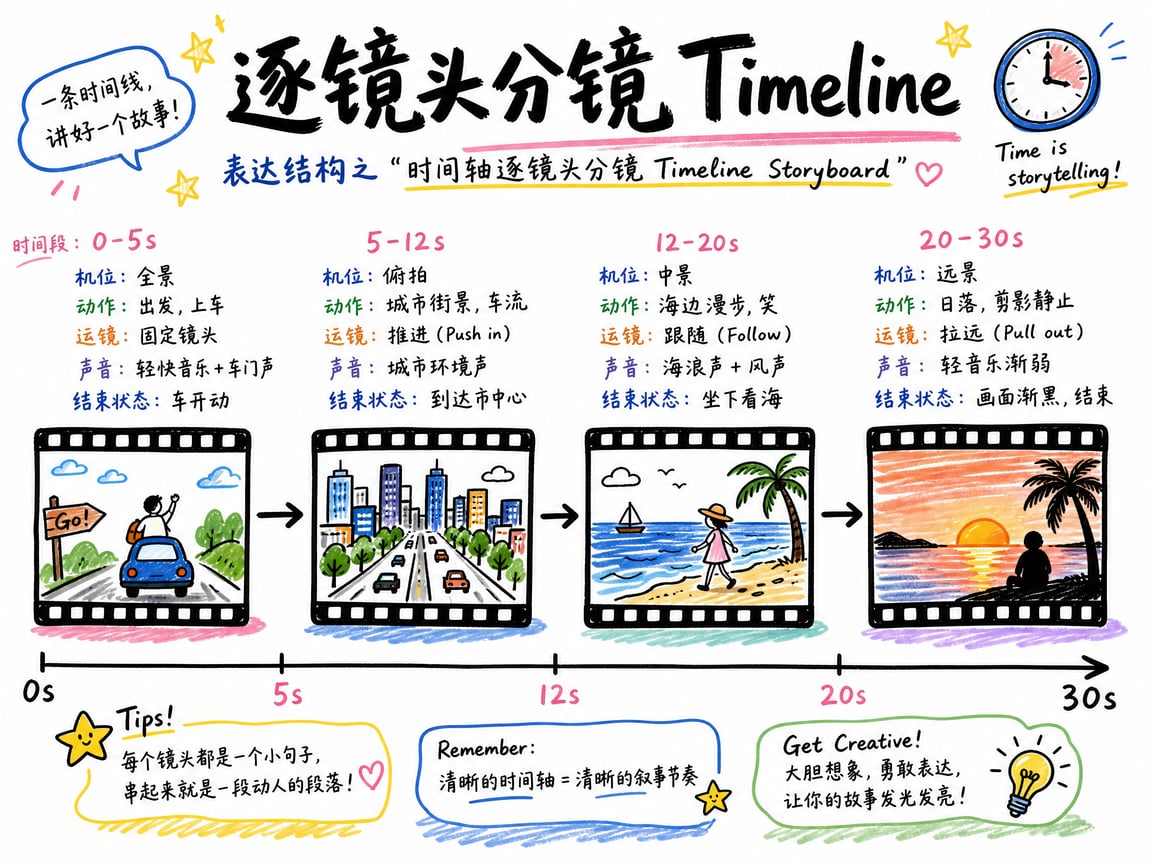
Split the total duration into consecutive time segments, give each segment only one main action, and spell out the camera position, camera movement, sound and end state. Suits multi-shot content that has to finish within a set time
Global spec + subject lock + timeline shot unit × N + cross-shot continuity + global negative constraints
A single shot unit can be filled in directly:
Time segment + shot size and camera position + subject action + camera movement + sound or dialogue + end state of this shot
This travel vlog splits 30 seconds into departure, exploring the city, arriving at the sea, socialising with friends and a sunset ending, letting location, action and emotion escalate continuously over time
https://x.com/bubblebrain/status/2083659648108990925
5 The one-take and path narrative: make the camera movement itself the story
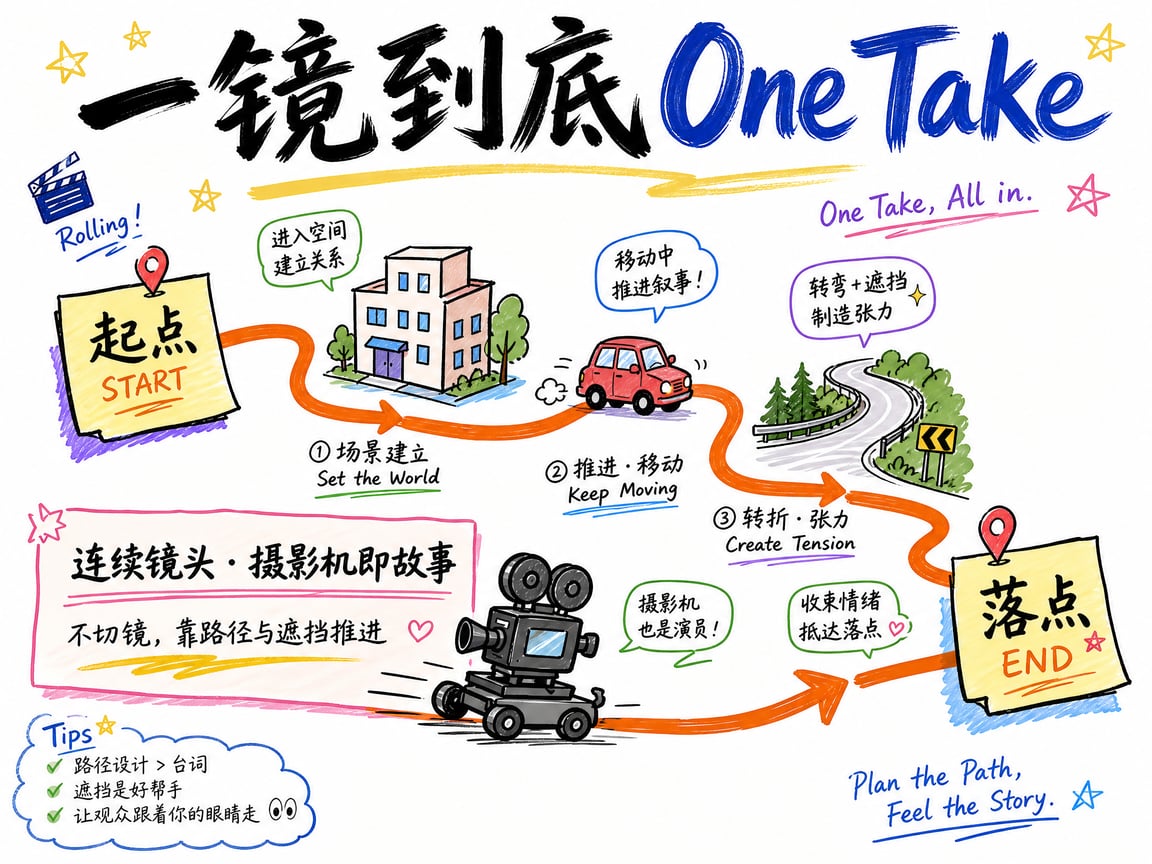
Instead of relying on cuts to switch scenes, drive the story with the spaces the camera passes through, the occluders and the path nodes. Suits chases, traversals and continuous spatial spectacle
Continuous-shot declaration + camera starting point + path node × N + physical transitions + subject anchor + final resting point + no cuts
A single path node can be written like this:
Where the camera starts + how it moves + what it passes through or around + where the subject is + how it enters the next space
This case first locks the assassin, the target, the vehicles and the Tokyo environment, then sends the camera through different spaces along a continuous chase route, using occlusion to keep motion and direction continuous
https://x.com/victorinfocus/status/2084074611751186713
6 The structured data template: make prompts generatable and checkable in bulk
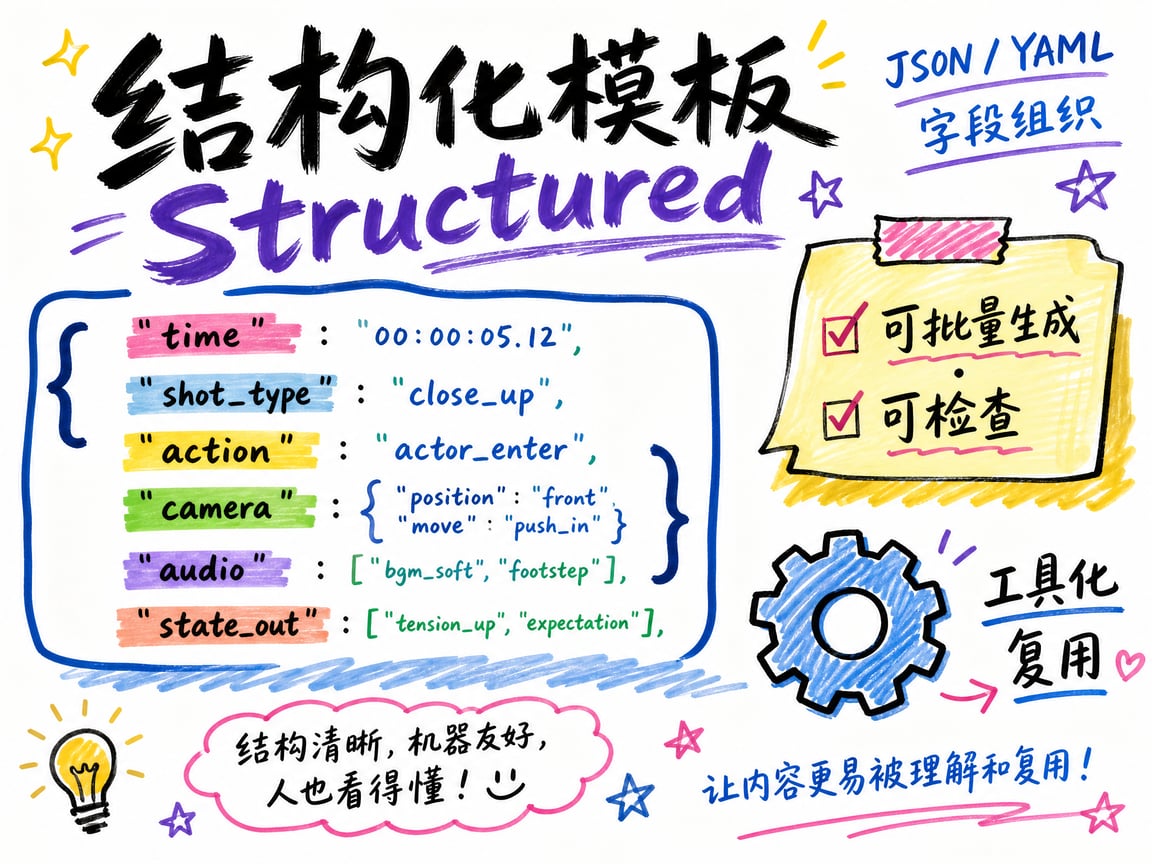
Use JSON, YAML or fixed fields to organise the global style, reference assets, characters and shots. Its main value is making it easy to generate, translate, validate and reuse prompts programmatically; it doesn't mean the footage automatically gets better
Metadata + global style + entity and reference table + shot array + audio layer + continuity constraints + negative constraints
Each shot object can be standardised as:
time + shot_type + subject + action + camera + audio + state_out
This case uses structured fields to separate title, style and shots, recording time, action, camera and dialogue for each shot. The effect is that tools can read it and it can be modified repeatedly with ease
https://x.com/sebatheepan/status/2084023216440246455
2. Control strategies: nail the parts that fail most easily
Control strategies decide which of the model's degrees of freedom must be tightened. Simply put, the expression structure governs how you say it, and the control strategy governs where it must not go wrong
From this batch of prompts, 8 types of control strategy can be distilled:
- Asset mapping: assigns each reference image its responsibility
- Identity continuity: keeps characters and products stable
- Timing and rhythm: arranges the order in which events happen
- Camera space: handles the camera path and its final resting point
- Action physics: handles contact, forces and outcomes
- Sound and lip sync: handles dialogue and audio synchronisation
- Medium texture: decides what device and production system the video looks like it was shot with
- Negative constraints: block the problems most likely to ruin the piece
These 8 strategies don't all need to go into the same prompt. Character or product ads usually rely more on asset mapping, identity continuity and negative constraints; action scenes rely more on timing, camera space and action physics; vlogs rely more on medium texture and sound control. First work out where this generation is most likely to fail, then combine the strategies you actually need
Asset mapping: let each reference image be responsible for one thing only
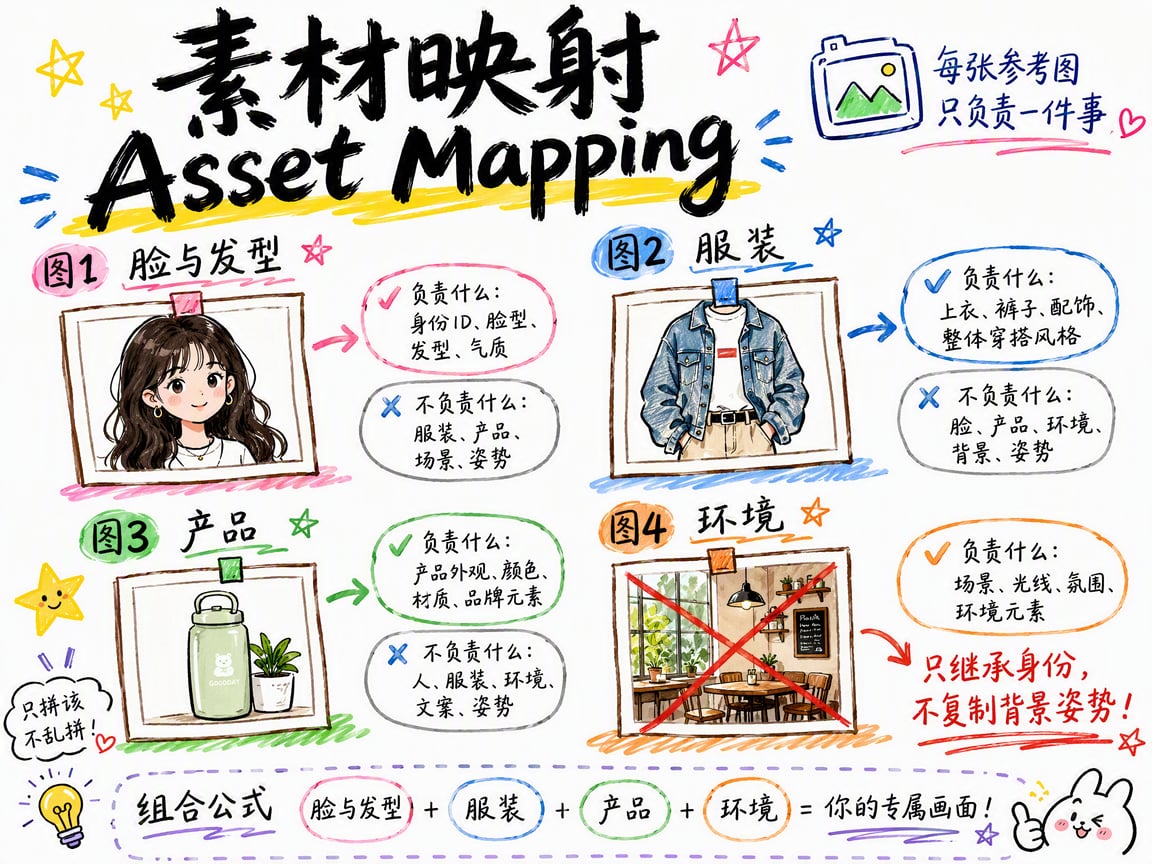
What asset mapping solves isn't whether you've uploaded reference images, but what the model should inherit from each one. Character, clothing, product, environment and action each need clear boundaries of responsibility
Asset ID + what it's responsible for + what it's not responsible for + attributes that must be inherited + attributes to ignore + priority in case of conflict
The laundry vlog lets Image1 provide only the character's face and hairstyle, and forbids the model from copying the reference image's background, pose and composition
https://x.com/doctorwasif/status/2083779989414019109
The two lines in the prompt that actually do the work are:
A woman (use Image1 only for facial identity and hairstyle) does laundry alone on a quiet morning Do not recreate or copy the reference image—use it only for facial identity and hairstyle
The first line states what Image1 is responsible for, the second what it's not responsible for. The model can therefore inherit the character's identity while regenerating the laundry room, clothing and actions
Identity continuity: keep characters, clothing, products and props stable

Identity continuity starts by separating which attributes must be locked and which may change naturally. Face, hairstyle, body shape, clothing and product structure can stay stable; expression, pose, fabric and lighting need room to move
Entity ID + locked attributes + attributes allowed to change + entry state per segment + end state per segment + count constraints
This luxury sunglasses UGC locks both the character and the product. The character moves between the bedroom, the mirror and the product close-up, but the face, the outfit and the structure of the sunglasses must not change
https://x.com/aiwithkhan/status/2084608509837275231
Rather than just writing "keep consistent", the prompt lists the attributes that need to stay stable one by one:
Preserve her facial identity, hairstyle, eye color, makeup, skin tone, body proportions, white sleeveless fitted top, light blue wide-leg jeans, pearl choker, rings, and bracelets consistently throughout the video Maintain perfect product consistency, including the frame shape, lenses, hinges, colors, materials, and proportions
The effect of writing it this way is to split character consistency and product consistency into two independent rules, so the model doesn't keep the face but change the frame, lenses or packaging between shots
Timing and rhythm: let each time segment accomplish only one main goal
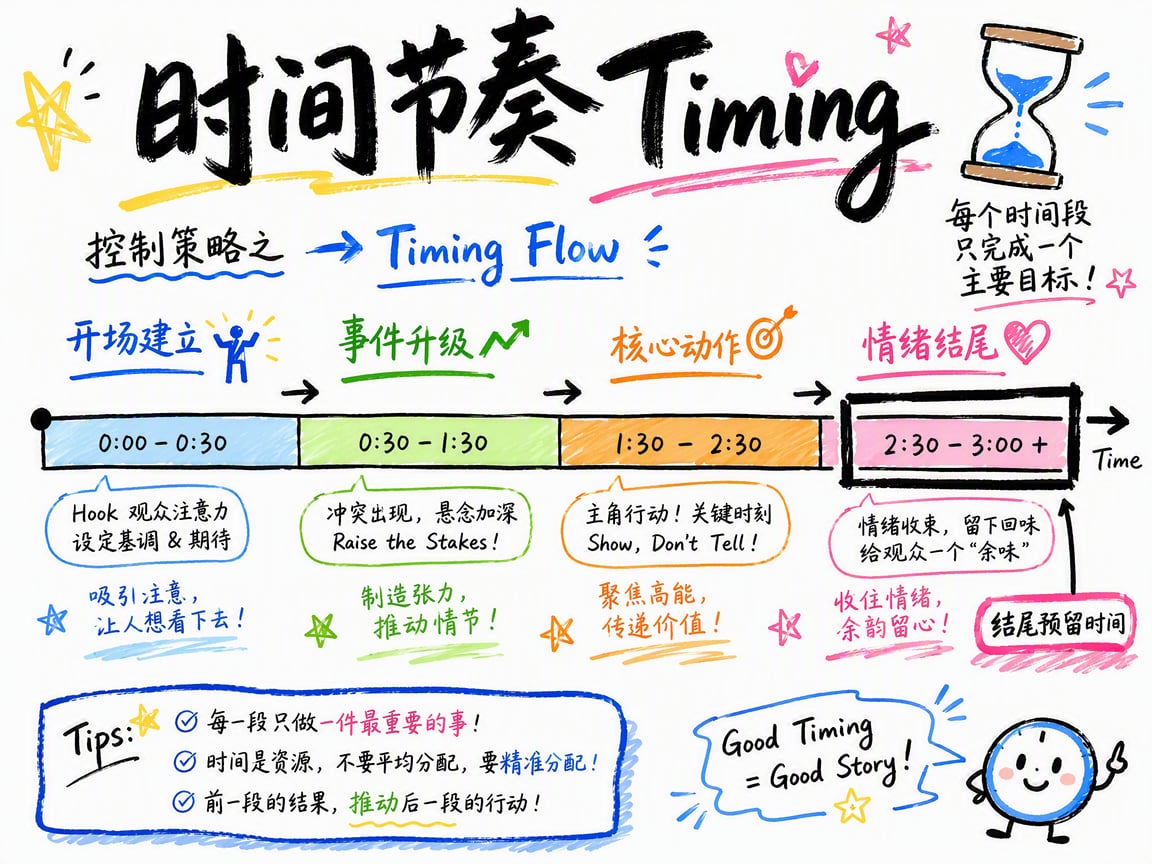
Timing isn't about filling every second; it's about giving the opening, escalation, core action and ending enough time each. Each segment carries only one main goal, and the next segment continues from the previous one's result
Total duration + time segments + a single goal per segment + trigger relationship between segments + time reserved for the ending
This travel vlog splits 30 seconds into departure, exploring the city, arriving at the sea, socialising with friends and a sunset ending. The last three seconds add no new events and only complete the emotional resolution
https://x.com/bubblebrain/status/2083659648108990925
The opening and ending are clearly separated in the prompt:
0-5s: Morning departure 27-30s: Ending moment. Golden hour sunset. She sits near the ocean, holding a drink, watching the sunset. The camera slowly moves backward
The first five seconds only establish the start of the day, and the last three seconds are only responsible for ending it. A 30-second video therefore neither stops abruptly after the climax nor keeps cramming new locations and actions into the ending
Camera space: let the shot know where it starts, how it moves and where it stops
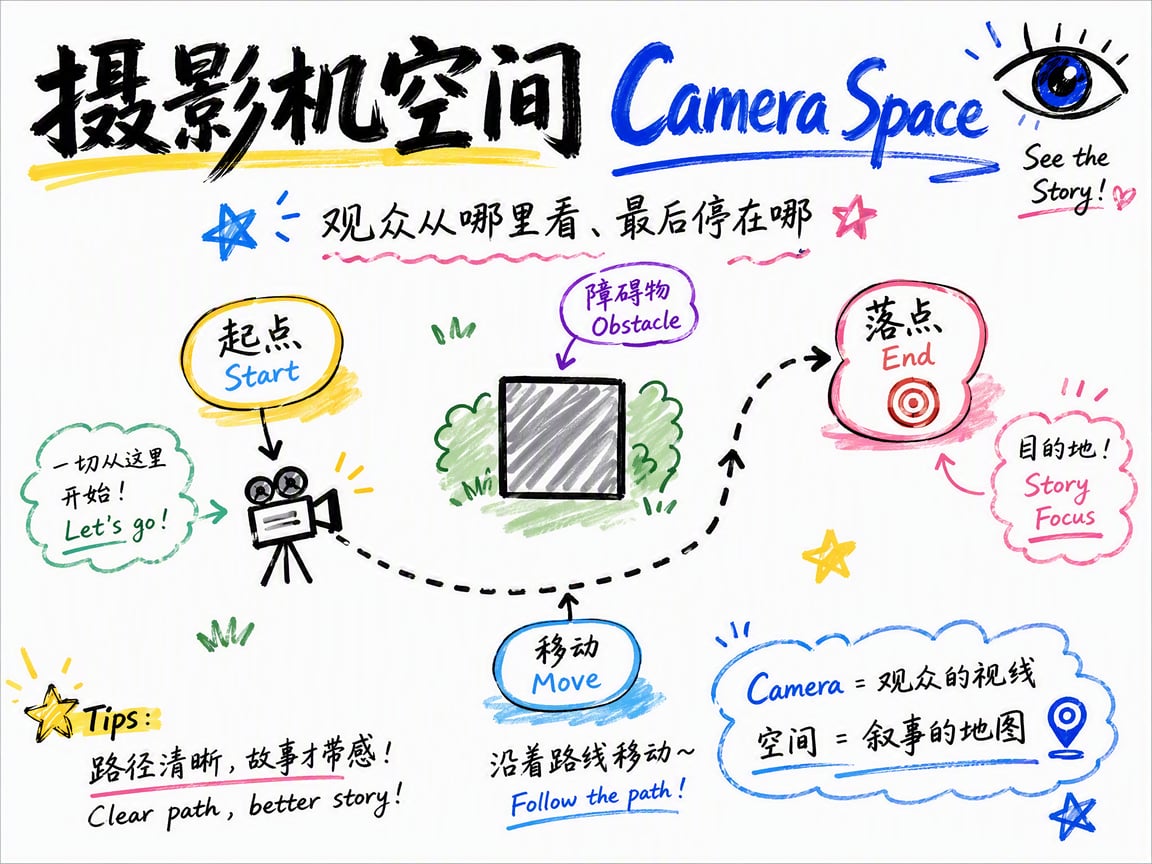
Camera space controls where the viewer looks from, where the subject sits in the frame, how the shot passes through the environment, and what composition it finally stops on. With only the name of a camera move and no spatial relationships, the model still doesn't know where to go
Camera starting point + subject's position in frame + a single main movement + spatial reference objects + transition method + camera end point
This Tokyo chase doesn't just say "fast tracking shot". It has the vehicles repeatedly overtake the camera, then lets the camera fall behind and get shoved aside by the crash, before finally turning to the assassin's front to close
https://x.com/victorinfocus/status/2084074611751186713
Two of its lines define the camera's relationship to the subject and the final resting point respectively:
The camera is repeatedly overtaken by the vehicles, falls behind them, then is rushed past as the crash unfolds End with a front-facing tracking shot of the assassin riding toward the camera at speed just after regaining control
The vehicles, the camera and the road are no longer three independent elements; they keep changing distance along the same axis of motion, which is how the viewer feels the speed, the danger and the final process of regaining control
Action physics: make contact, force and outcome actually connect
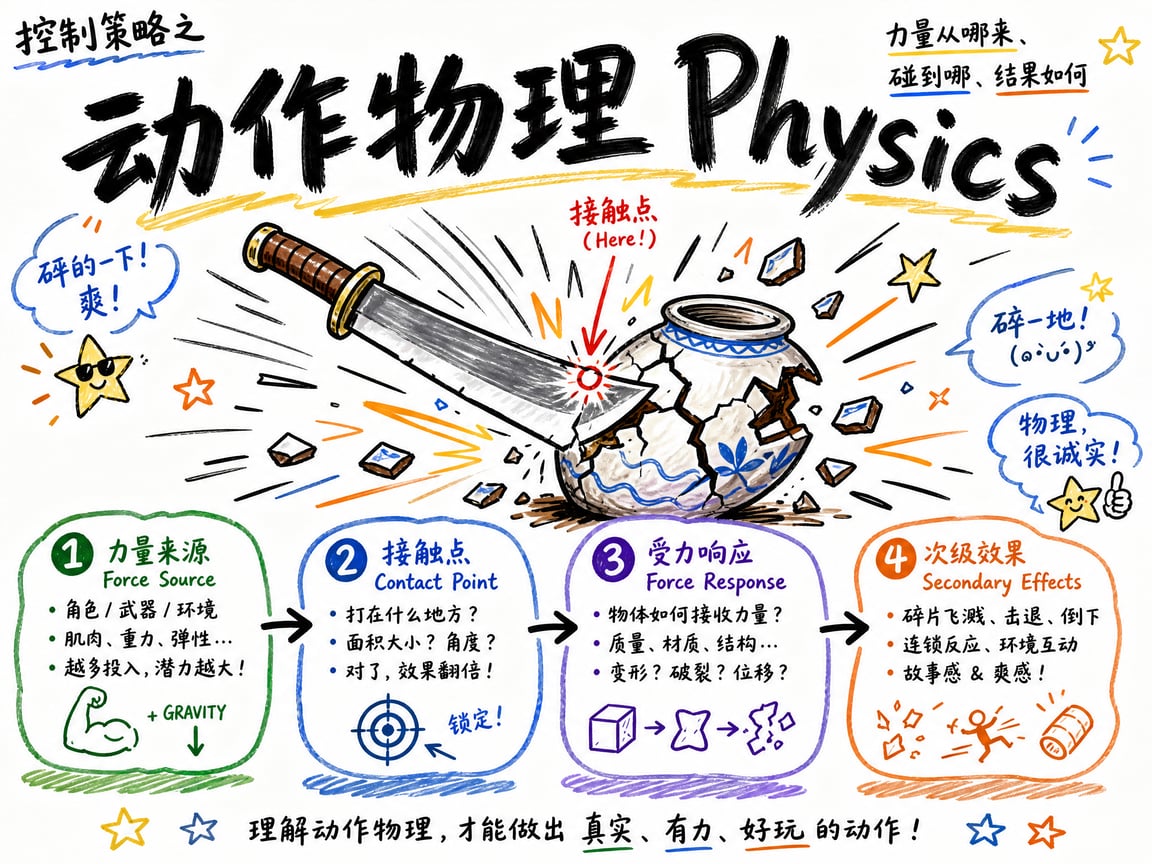
Action physics can't just say "realistic" or "impactful". You need to state where the force comes from, where it makes contact, how the object responds, what secondary effects it produces, and whether the result carries over into the next step
Initial state + driving force + contact point + response to force + secondary physical effects + stable result after the action
This blade-forging reality show doesn't write the test as "the master smashes the ceramics". It walks through the swing, the hit, the shattering, the scattering and the state of the blade after it enters the object
https://x.com/techhalla/status/2084018642300141851
The prompt's description of the first hit is:
Master steps in, raises the machete. Hard cut to side angle as he delivers a powerful overhead chop into the first gnome Impact explodes in slow motion: ceramic shatters into sharp fragments, paint chips and dust fly outward. Time locks at peak penetration
The source of force, direction of the action, object of contact, material reaction and final state can all be seen. The model doesn't have to guess what "impactful" means with contactless explosions or random fragments
Sound and lip sync: give dialogue, ambient sound and music each their place

Sound control needs to spell out who makes sound when, in what language, whose lips it follows, what else is in the background, and whether the music should give way to dialogue and action
Sound source + time point + language and content + performance style + sync target + spatial position + background sound
This two-singer pop MV keeps both singers performing through the verses and choruses, switching to interaction and choreography only in the instrumental sections, so that mouth shapes, music sections and performance state don't fight each other
https://x.com/zarairahh/status/2084992037313507340
The prompt directly defines the difference between the sung and instrumental sections:
Both artists actively perform the song with perfect lip synchronization, realistic mouth movements, expressive facial expressions, confident body language, and emotional delivery During instrumental moments they naturally interact with each other through elegant movement and subtle choreography
These two lines together make clear what the lip sync targets, what the performance state is, and what to do when there are no lyrics, so the model doesn't have the characters mouthing meaninglessly from start to finish
Medium texture: make the video genuinely look like a vlog, DV, documentary or film
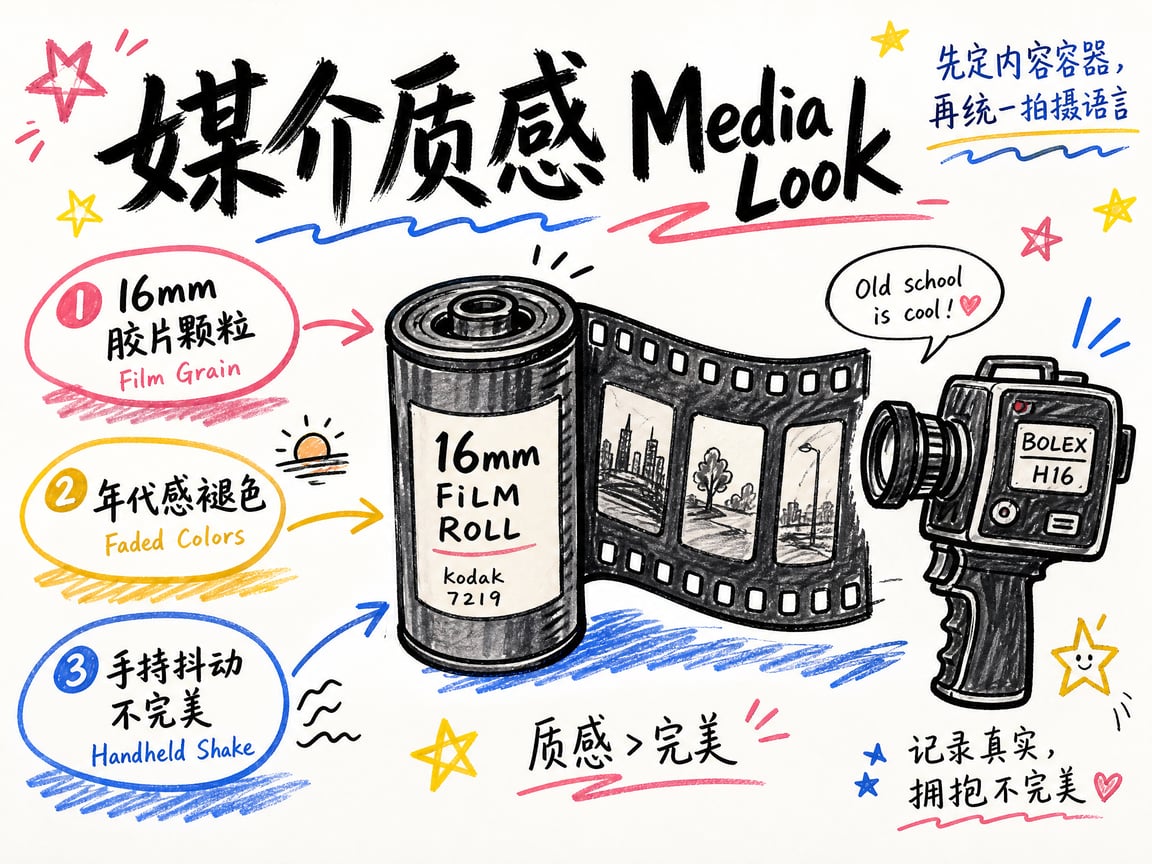
Medium texture isn't about stacking "8K", "cinematic" and "hyper-realistic" at the end of the prompt. First decide what kind of content the video is, then use device, era, lens flaws, exposure and colour to build one consistent shooting language
Content container + shooting medium + optical characteristics + motion flaws + exposure and colour + material rendering + excluded visual styles
What this Mediterranean travel short wants isn't a polished commercial, but a reel of 1970s 16mm documentary footage rediscovered decades later
https://x.com/hey_am_cherry/status/2083561941004685471
The prompt doesn't use abstract quality words but a set of concrete features belonging to one and the same medium:
Authentic late-1970s Mediterranean documentary captured on vintage 16mm Kodak film, naturally faded colors, subtle film grain, real optical imperfections, slight gate weave Shoulder-mounted handheld camera with imperfect human movement, soft vintage lenses, warm afternoon sunlight, no cinematic polish
Faded colours, film grain, gate weave, shoulder-mounted handheld and imperfect movement all point to the same old-documentary texture, so the footage doesn't look like a phone vlog, a modern ad and vintage film all at once
Negative constraints: block only the problems most likely to ruin this generation
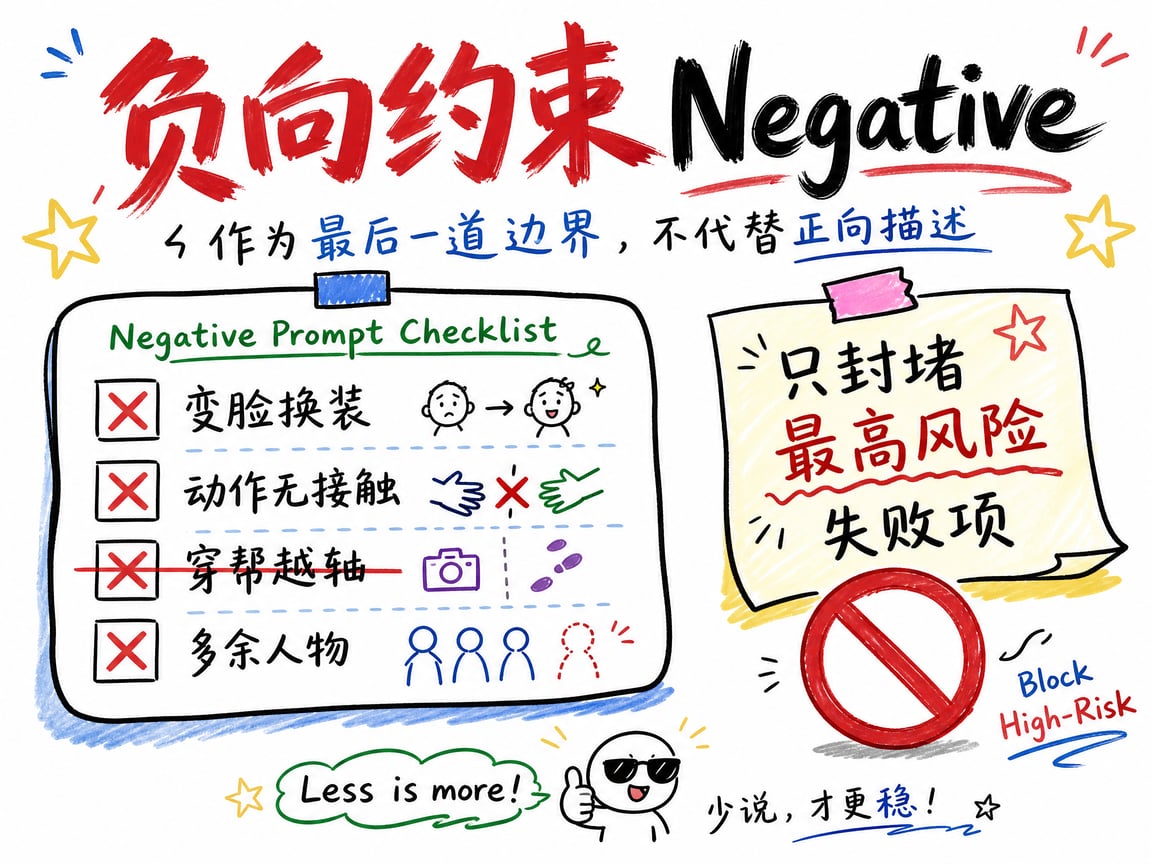
Negative constraints aren't a case of "the more generic banned words the better". They set a final boundary based on the high-risk failure points of the current task. Character, camera and physics problems should be constrained separately, with a clear statement of what matters most when they conflict
Positive goal + high-risk failure items + what the constraint applies to + scope of the constraint + priority in case of conflict
What this 30-second close-quarters fight fears most is characters swapping identities, actions with no contact, the camera crossing the line and the scene's position changing, so its negative constraints all revolve around the problems that would make the fight unwatchable
https://x.com/lansenai/status/2083521805176988016
The parts of the prompt directly concerning the characters and actions are:
全程不得交换身份,不得变脸、改变服装颜色、改变体型或生成第三名参战者 禁止隔空挥拳、拳脚穿透身体、没有接触却自行后退、无故旋转、连续空翻、悬浮和夸张飞行
These restrictions don't re-describe the desired picture; they block in advance the most common ways a fight video gets ruined. Protecting the two identities, real contact and the direction of the action matters more than adding a long list of generic banned words
3. Assembling the complete prompt
When you actually sit down to write a prompt, you don't need to copy out the 6 expression structures and 8 control strategies above all over again! The content above is the big, comprehensive primer!
What we need to do is first decide what this video delivers, then choose one expression structure to carry the information, and finally add only the control strategies this task actually needs!
The order matters. The content container and expression structure should come first; character, asset, timing, camera, action, sound and medium controls follow; negative constraints go last, to block the failures you can already foresee, not to replace the positive description
The general formula for a Seedance 2.5 prompt
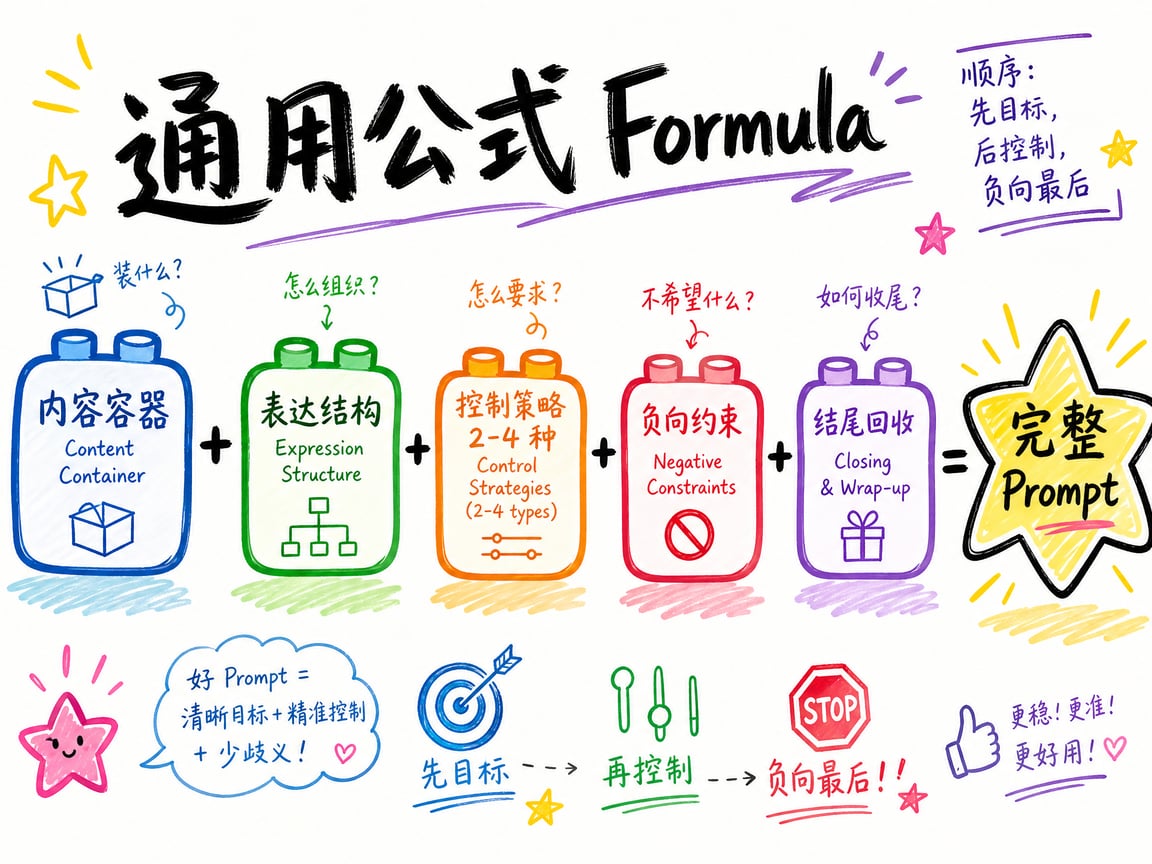
Complete prompt = content container and deliverable goal + 1 expression structure + 2 to 4 necessary control strategies + transition states between segments + targeted negative constraints + closing resolution
This 15-second laundry vlog uses continuous natural-language narrative as its outer structure, then adds asset mapping, medium texture, sound and negative constraints. It doesn't cram in every control strategy just to look professional
https://x.com/doctorwasif/status/2083779989414019109
The key blocks in the prompt are:
15s handheld home-video vlog, 7-shot montage A woman (use Image1 only for facial identity and hairstyle) does laundry alone on a quiet morning Sequence: untangles wet clothes → shakes out a shirt → checks a collar stain by the window → hangs it → finds a mismatched sock → struggles with a heavy bedsheet → finishes hanging it Dialogue is natural spoken Korean. Ambient sound only: washer winding down, wet fabric, clothespins, rustling clothes, soft laughter, breeze No subtitles, text, logos, or watermarks
The first line establishes that the deliverable is a 15-second home-video vlog, the second line completes the asset mapping, the action chain carries the narrative, and the sound and negative constraints only handle the risks this scene actually has. That's what combining one expression structure with several control strategies looks like
How to cut unnecessary control items according to the task
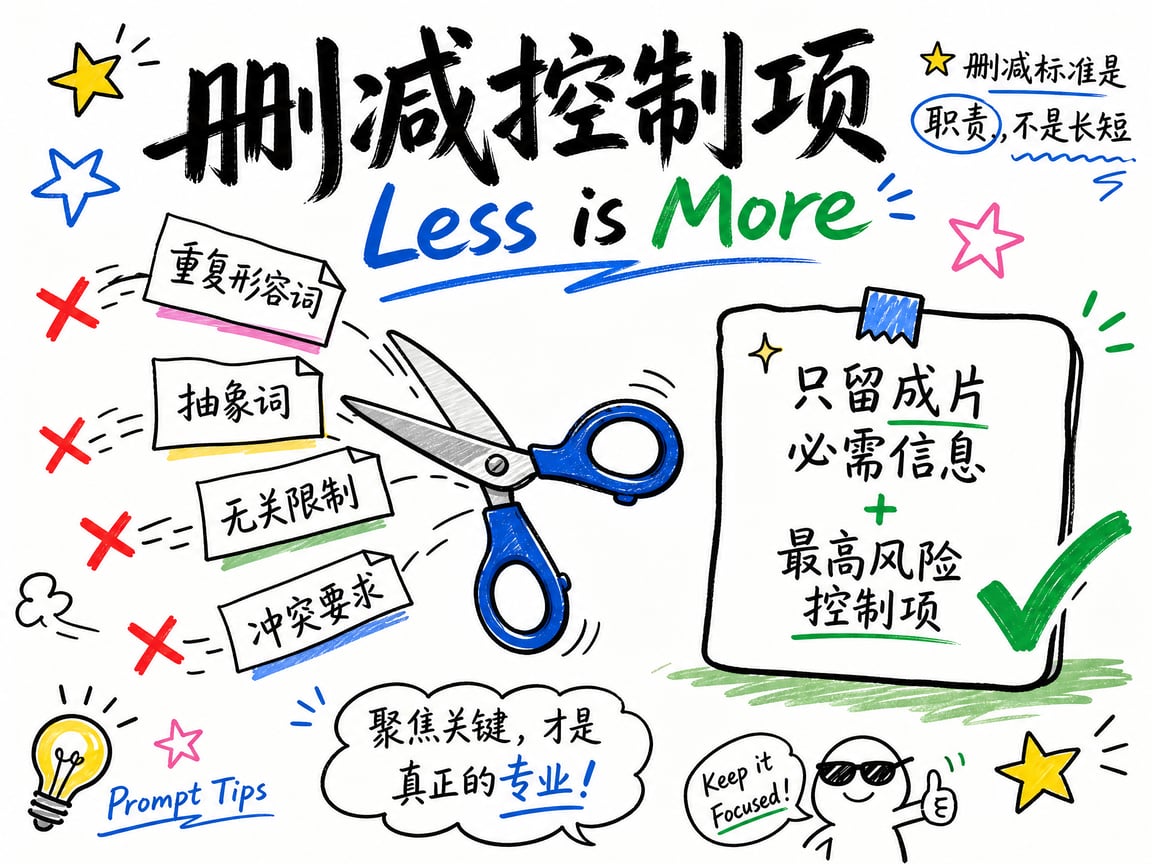
More information doesn't make a prompt more stable; every requirement competes with the others for the model's execution space. When cutting, ask just two questions: does this piece of information directly affect the deliverable goal, and if I delete it, does the risk of ruining the piece rise significantly
Keep = information the deliverable goal requires + the highest-risk control items for the current task Delete = repeated adjectives + unverifiable abstract words + irrelevant restrictions + mutually conflicting requirements
This case's complete prompt is a single sentence. It has no character reference, timeline, camera, sound or negative constraints, handing all audiovisual decisions to the model
https://x.com/arikuschnir/status/2083209950231220403
Make a movie about connection and community
It holds up because the task only asks the model to make a film around connection and community; there's no character to replicate, product to show or prescribed action to protect. This case doesn't prove that shorter prompts are better, but it shows that control items which don't affect the deliverable goal don't need to be forced in
If the same task were switched to a product ad, product structure, asset mapping and logo stability would immediately become required items. The criterion for cutting isn't length but whether the requirement carries a clear responsibility
How to check whether the actions can be completed in the allotted time
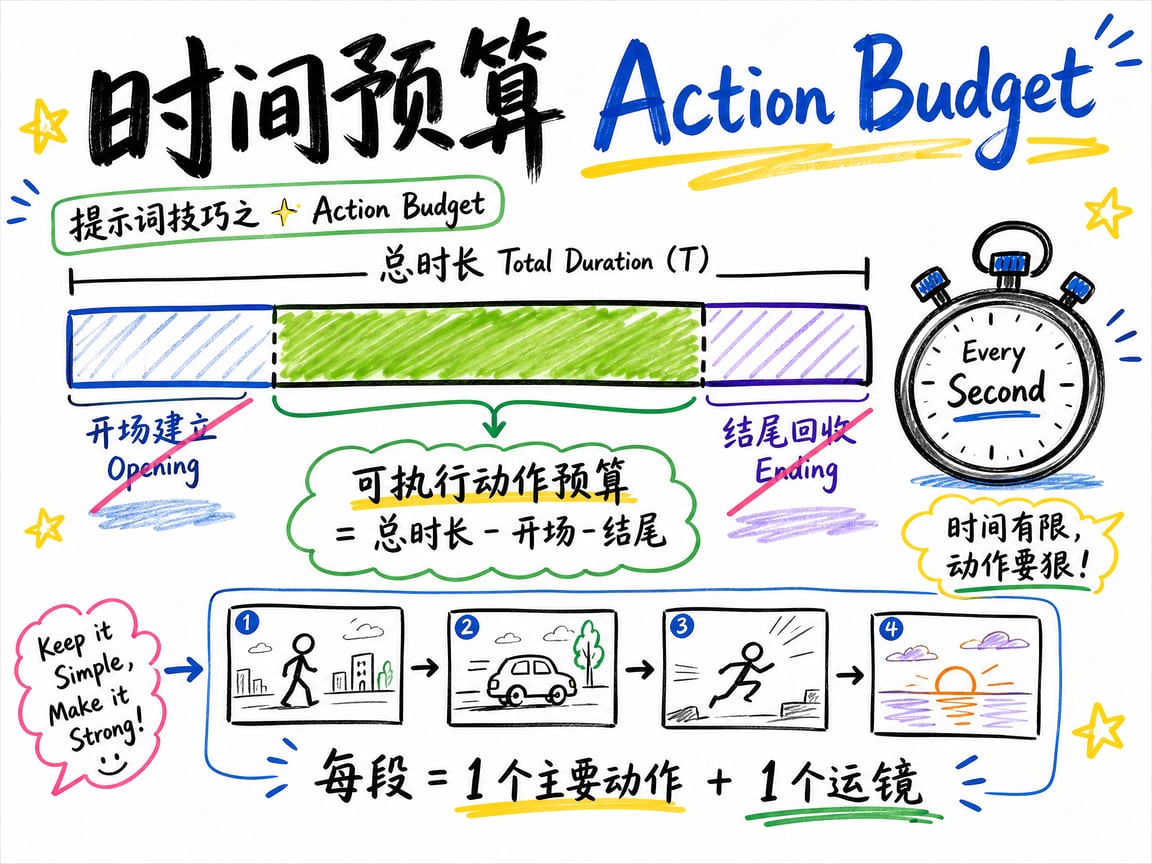
Many prompts aren't under-detailed; they schedule events into a dozen-odd seconds that the model simply can't finish in time. To check, first subtract the opening setup and the closing resolution from the total duration, then look at how many new actions each segment in the middle carries
Executable action budget = total duration - opening setup time - closing resolution time Each time segment = 1 main action goal + 1 main camera move + necessary sound
This 30-second wuxia action comedy spends 2 seconds establishing the fight over a steamed bun, then distributes the sword draw, the mid-air struggle, the inn chaos, the decisive blow, the twist and the wrap-up across consecutive time segments
https://x.com/johnagi168/status/2083430135152209926
The prompt's time skeleton is very clear:
[00:00-00:02] 钩子·同时出手 [00:02-00:06] 拔剑·桌面开打 [00:06-00:11] 空中争夺 [00:11-00:16] 客栈大乱 [00:16-00:21] 决胜一击 [00:21-00:26] 神反转 [00:26-00:30] 傻眼收尾
Each segment has a single narrative task, and the bun runs through the whole piece as one visual anchor, so the model doesn't have to understand several unrelated action threads at once
When checking your own prompt, treat every new location, new character, new prop and new action as an execution cost. If a three-second segment demands a scene change, speech, picking up a product, showing details and completing a camera move all at once, split the segment or drop the secondary actions
How to reserve the last 2 to 4 seconds for the ending
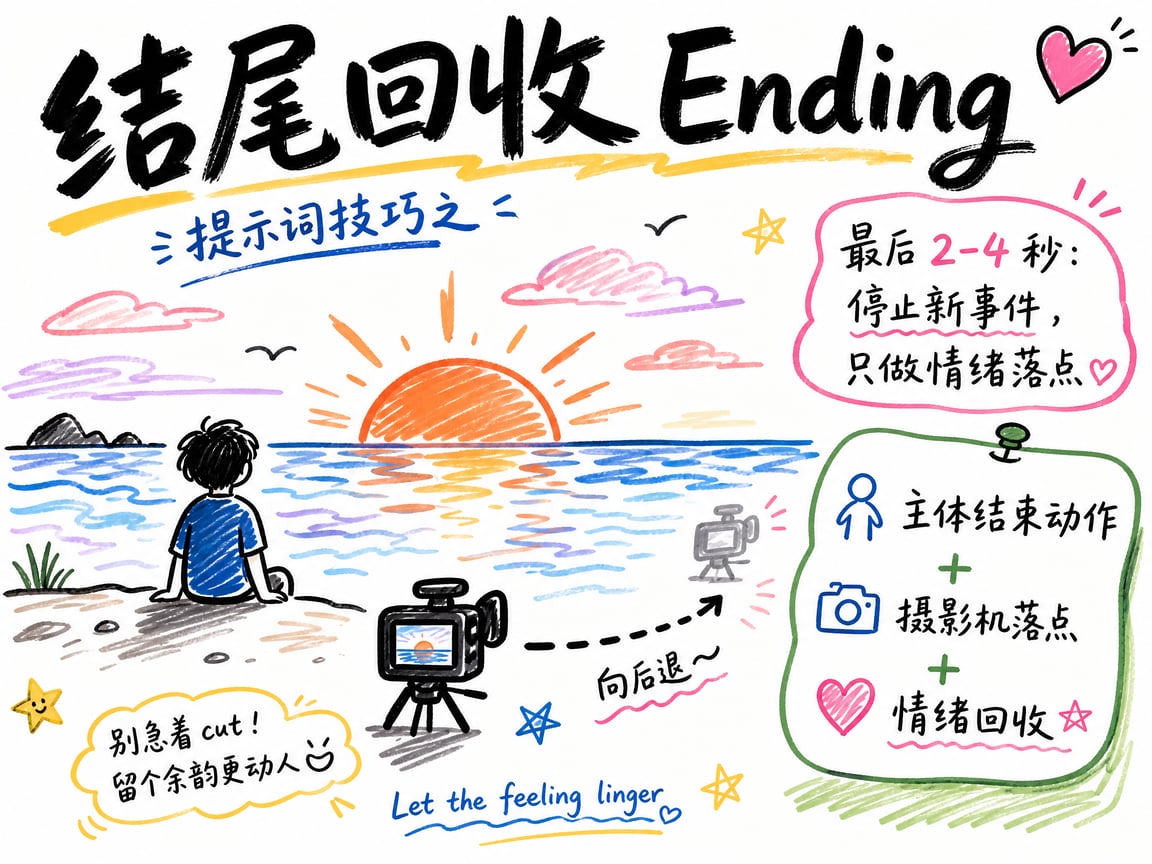
The ending isn't whatever seconds are left over once the story is written. It's a stretch of time you deliberately reserve from the start in which no new events are added, letting the subject finish the last action, the camera come to a stop, and the viewer know the video is over
Closing resolution = stop adding new events + subject's closing action + camera's final resting point + emotional or sound resolution
The last three seconds of the travel vlog add no more locations or people; they just have the lead sit by the sea watching the sunset while the camera slowly pulls back
https://x.com/bubblebrain/status/2083659648108990925
The prompt's arrangement for the ending is:
27-30s: Ending moment. Golden hour sunset. She sits near the ocean, holding a drink, watching the sunset. The camera slowly moves backward, revealing the beach, waves, and the peaceful evening
The subject goes from moving to still, the camera from approaching to pulling back, the frame expands from the character to the beach and the sunset. Three seconds accomplish one emotional landing point, so the video isn't cut off in the middle of the previous activity
Three practical formulas you can copy directly
Seen all that and still don't know how to write one? No problem. I've prepared three ready-to-use formulas for the most frequent scenarios
Task-chain UGC

In ultra-natural UGC selling content, what's reusable isn't just the phone image quality; it's having the character genuinely complete an everyday task, with every shot showing the result of the previous step and naturally triggering the next
Authentic shooting identity + one completable everyday task + 4 to 6 consecutive action nodes + hand or object feedback at each node + phone-shooting flaws + on-site ambient sound + natural wrap-up after the task is done
This supermarket shopping UGC doesn't just have the character hold a product and talk. It links entering the store, choosing, inspecting, tasting, putting things in the cart and heading to checkout into one complete shopping trip
https://x.com/AIwithSynthia/status/2084264050717045019
The prompt first establishes the shooting identity and the task:
A realistic UGC-style lifestyle grocery shopping vlog filmed vertically on a smartphone with natural handheld movement and subtle camera shake
Then it drives the task with concrete actions:
She walks toward the refrigerated drinks section, scans the shelves, and picks up a green cold-pressed juice bottle, turning it slowly so the label faces the camera Close-up of her hand selecting fresh oranges, gently inspecting one before placing it into the cart Finish with her walking toward the checkout while smiling at the camera, pushing the cart under warm golden lighting
She picks up the drink only after scanning the shelves, puts the fruit in the cart only after inspecting it, and finally walks to the till. The effect is of a creator genuinely completing a shopping trip, rather than the character, products and supermarket being randomly cut together
When applying it, first spell out the task the character has to complete, then break the actions down in real order, keeping only the nodes that change the state of the character, the product or the environment
Product promotion
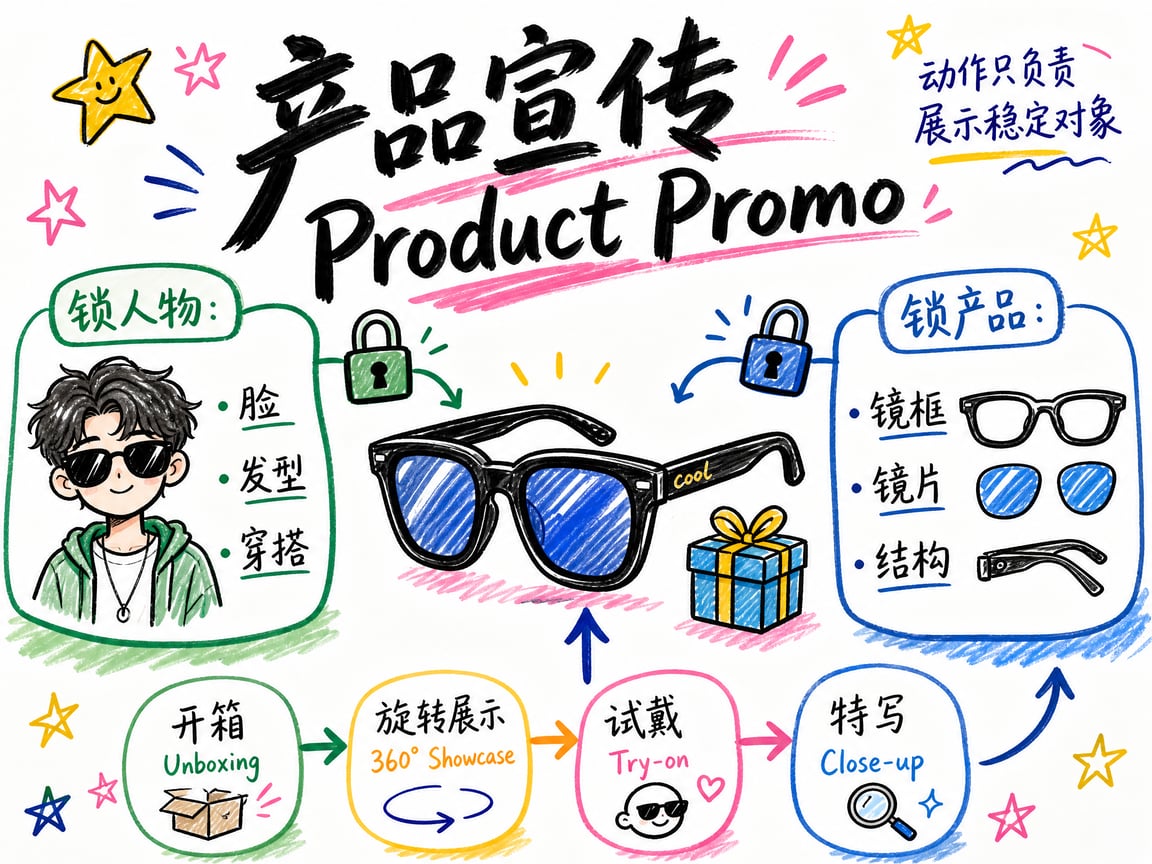
The point of this approach isn't uploading more reference images. It's first assigning each asset its responsibility, then separately locking the attributes of the character and the product that must not change; the actions are only there to show off these stable objects
Character asset responsibility + product or clothing asset responsibility + attributes each must lock + attributes allowed to change naturally + action chain around the product's value + final display state + constraints against identity drift and product deformation
This luxury sunglasses UGC uses the character, the sunglasses, the retail packaging and the leather case together. The character handles unboxing, showing, trying on and reviewing, while the product must keep its structure consistent across different shot sizes
https://x.com/AIwithkhan/status/2084608509837275231
The prompt locks the character and the product separately first:
Use the uploaded reference image as the exact character reference. Preserve her facial identity, hairstyle, eye color, makeup, skin tone, body proportions, and outfit consistently throughout the video Use the uploaded sunglasses, retail box, and leather carrying case as locked product references. Maintain perfect product consistency, including the frame shape, lenses, hinges, colors, materials, and proportions
Then every action revolves around the product:
She picks up the box, opens it naturally, reveals the leather case, then slowly removes the sunglasses She rotates the sunglasses slowly in front of the camera, showing the frame, hinges, and lenses The camera slowly pushes in on the sunglasses before fading out
Character identity and product structure are two independent sets of stability rules, while unboxing, rotating, trying on and the final close-up form the product display chain. That way the model doesn't focus on the character's performance and change the frame, lenses or packaging when the shot changes
The personal diary vlog

There's one more thing about Seedance 2.5 that nobody much talks about: its ultra-realism, so real that you can't tell whether it's AI-generated or shot by a real person.
After studying everyone's vlog-style prompts, I found that what keeps recurring isn't the travel destination or a CCD filter. It's first establishing a private-record relationship between the character and the viewer, then deepening that relationship continuously with life moments from the same day
Fixed character + private-record relationship + 3 to 5 life moments from the same day + one natural action and an offhand remark per segment + a selfie or casually placed camera position + slight loss of focus and imperfect composition + identity continuity across scenes + a gentle emotional wrap-up
This idol's personal vlog strings waking up, introducing herself, playing with her cat, doing her everyday hobbies, going out for a walk and saying goodbye at home into one day. Every moment serves to make the viewer more familiar with this person
https://x.com/BubbleBrain/status/2084013378461478952
The prompt starts by ruling out any commercial feel and fixing the relationship between the character and the viewer:
Not a commercial, not a music video, but a genuine personal diary captured with a small camera or smartphone The mood is warm, intimate, soft, and slightly nostalgic
Only then does it lay out the life moments of the day:
0-8s: Morning bedroom introduction 18-30s: Introducing her cat Bubble 30-45s: Her everyday hobbies 45-55s: A small outside moment 55-60s: Ending the vlog
These segments aren't five independent scenes. The character's state gradually relaxes from just-woken-up, and the viewer goes from meeting her, to seeing her cat and hobbies, to keeping her company as her day ends. The effect is more like a character diary that could keep running as a series
To choose between the three formulas, look only at what the video stands on. If the character needs to believably complete a task, choose task-chain UGC; if you need to display a character and product stably, choose product promotion; if you need to build a sense of ongoing companionship, choose the personal diary vlog
The five prompt-writing habits that burn the most money
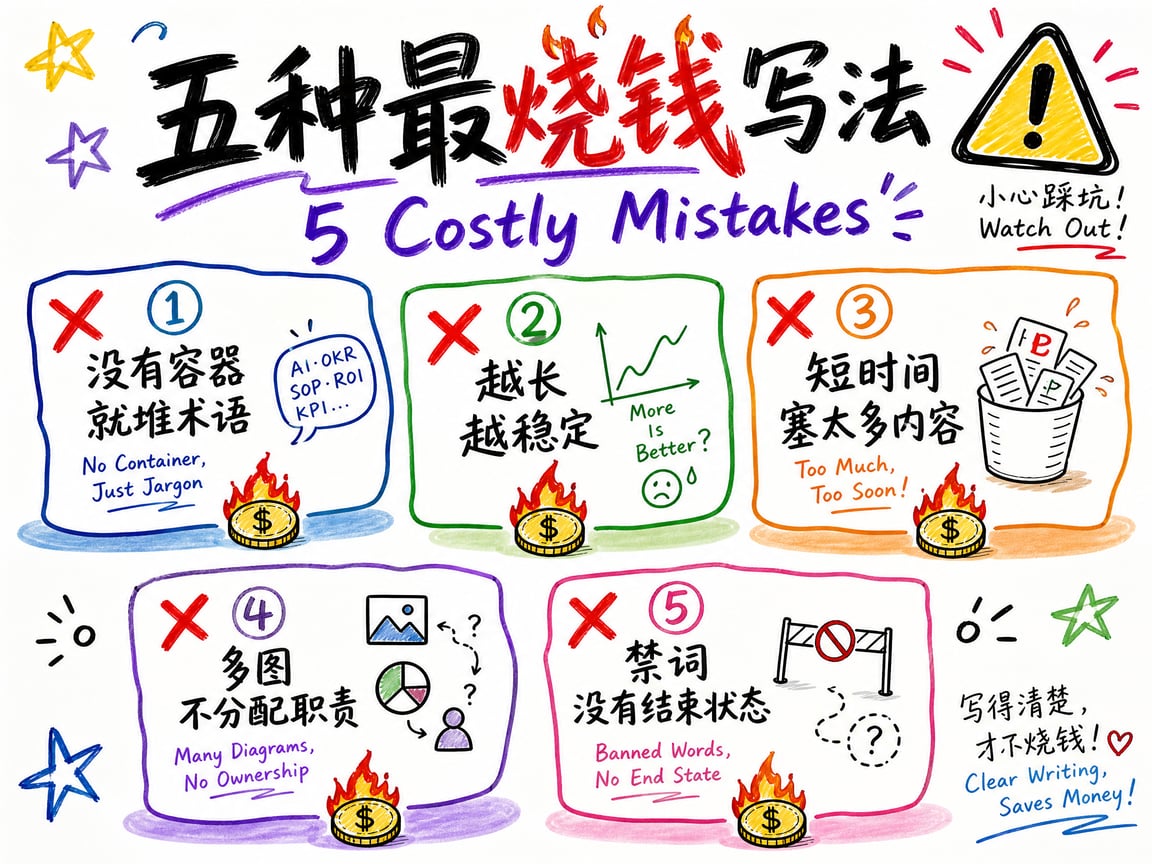
Piling up cinematography terms without a content container. If you only write "cinematic", "shallow depth of field" and complex camera moves, the model still doesn't know whether this is a vlog, an ad or an action film; first fix a content container the viewer recognises at a glance, then let the cinematography terms serve it
Mistaking a longer prompt for more stable execution. Repeated adjectives actually drown out the actions and outcomes that really matter; in each segment keep only the information that changes the picture, the sound or the state of the next shot
Cramming too many characters, locations and actions into a short time. The model easily drops actions, swaps identities or skips the process entirely; cut down to one main thread and let each time segment complete only one main event
Uploading several reference images without assigning them responsibilities. Character, clothing, product and background contaminate each other; spell out what each image is responsible for, what to inherit, and what must not be inherited
Writing a long list of prohibitions without a clear end state. That can only reduce errors; it can't tell the model where the shot should finally stop; first spell out the character's position, what's in their hands, the result of the action and the final composition, then add the three to five most critical restrictions
Closing ramble
The more expensive the video, the more these problems should be solved before you click generate. Bookmark this guide first and come straight back to plug in the formulas the next time you write a prompt. I hope everyone can generate a video they're happy with
SOURCE NOTE
由林悦己在 X 首发的 Seedance 2.5 Prompt 指南整理